Can Buch

Can Buch

La Garrotxa

Spain

Off-Grid

Community

Immersive

Immersive

Location

La Garrotxa

Setting

Forest, Hillside

Era

Historic masía, rebuilt 2017–2020

Type

Masía

Style

Permaculture, Natural building

Scale

8 rooms + separate apartment

Open During

Year-round

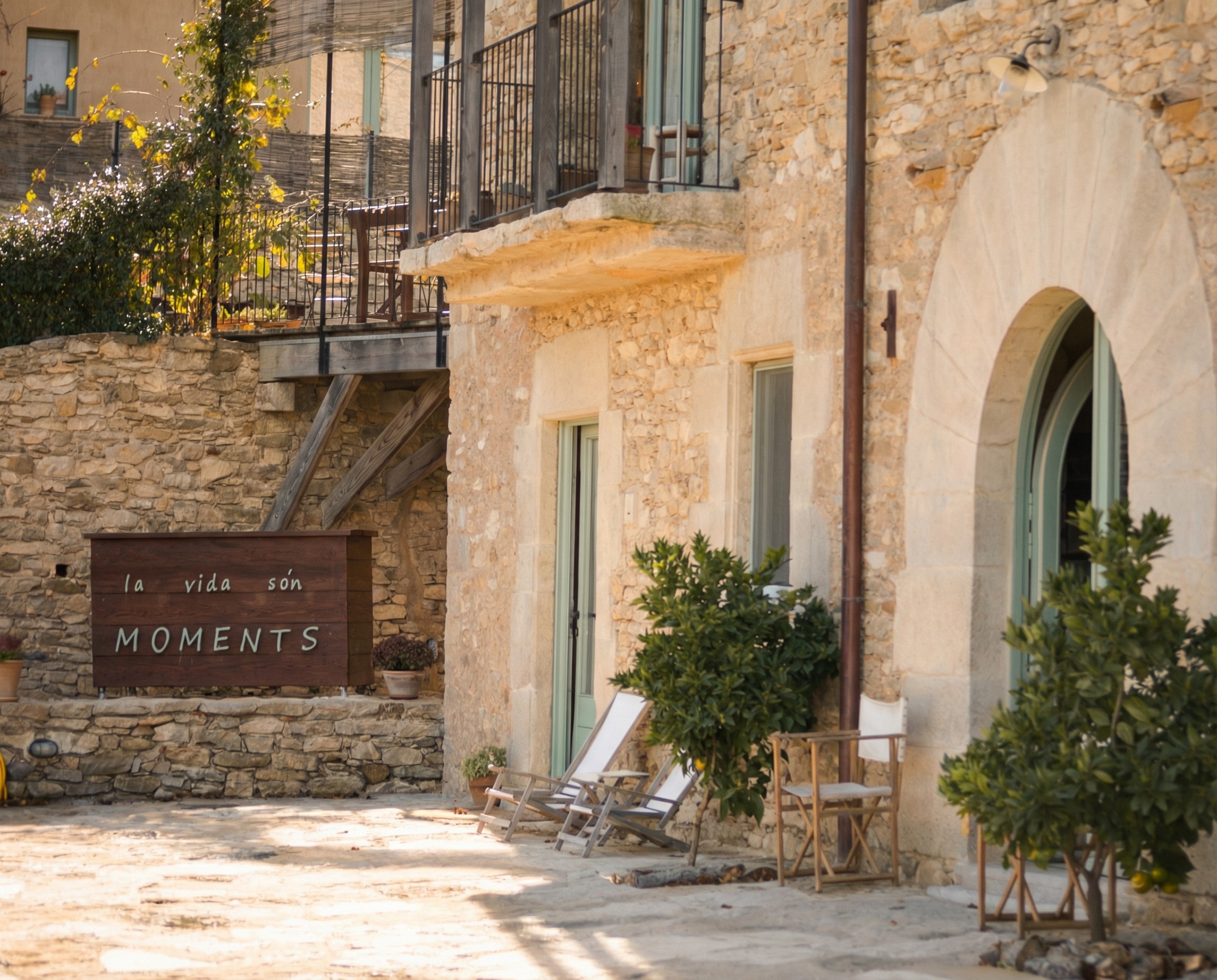
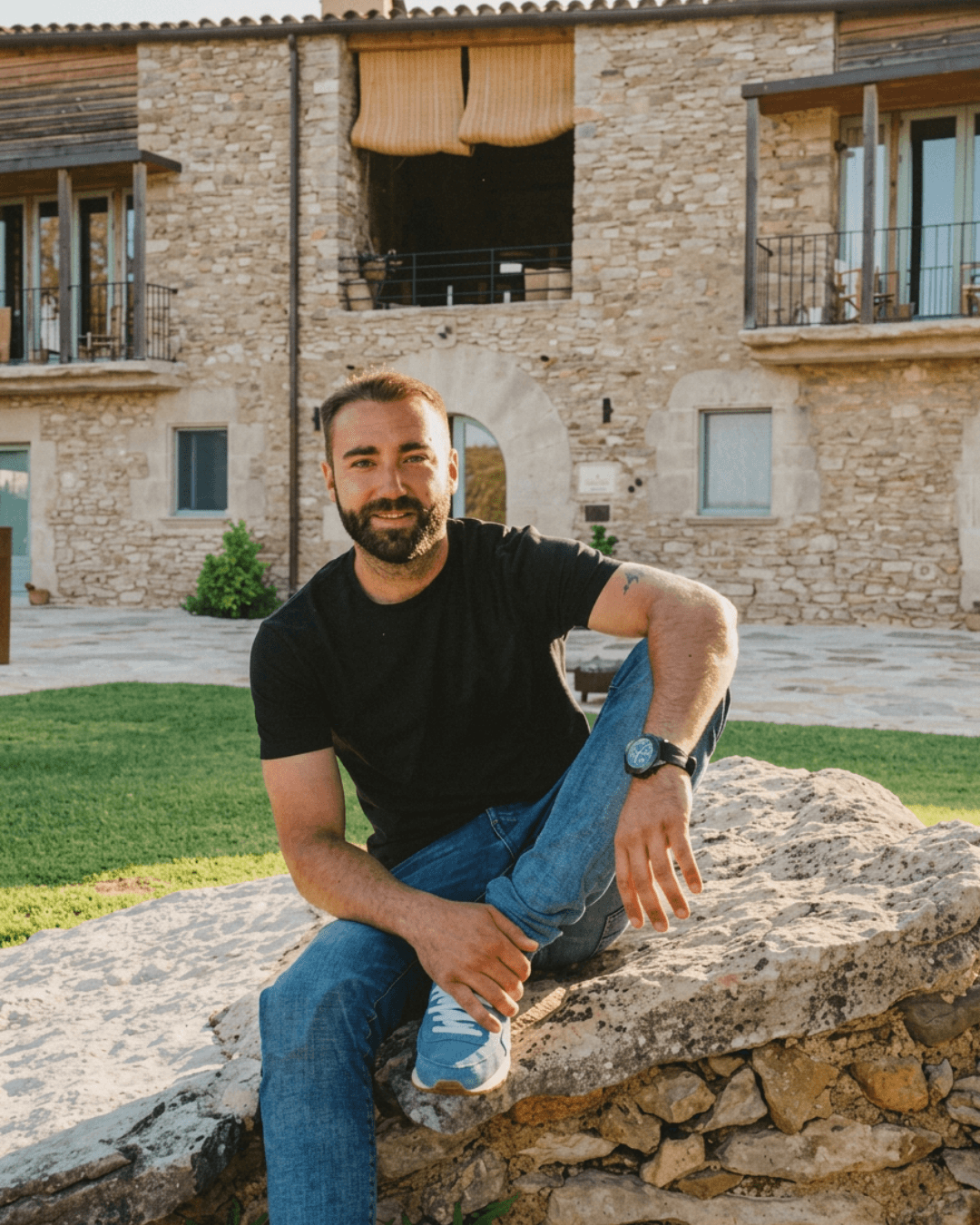
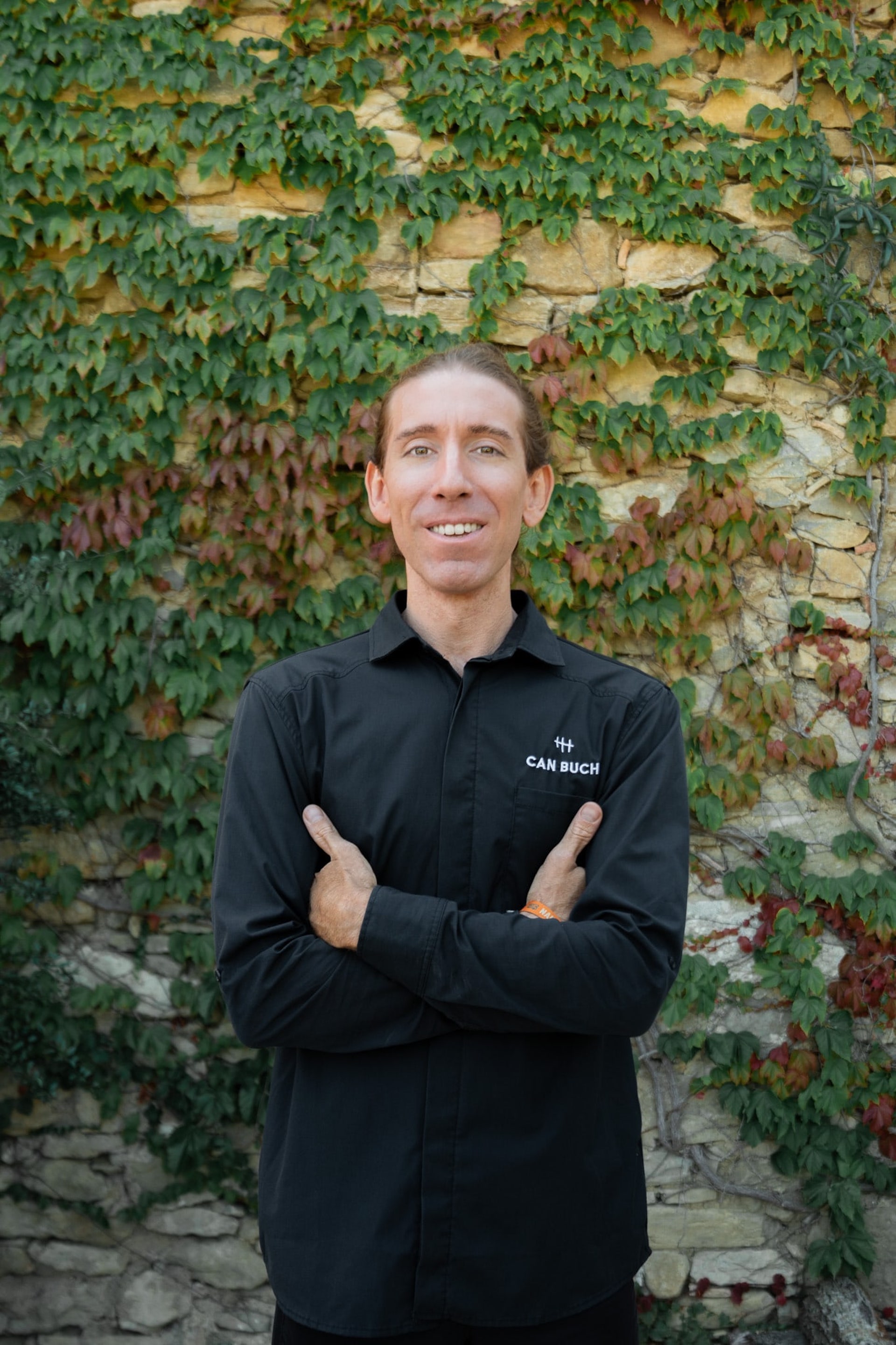
Deep in the forests of La Garrotxa, Can Buch is a fully off-grid masía rebuilt stone by stone - a living farm community of eight people led by the retired football player Gerard Bofill.
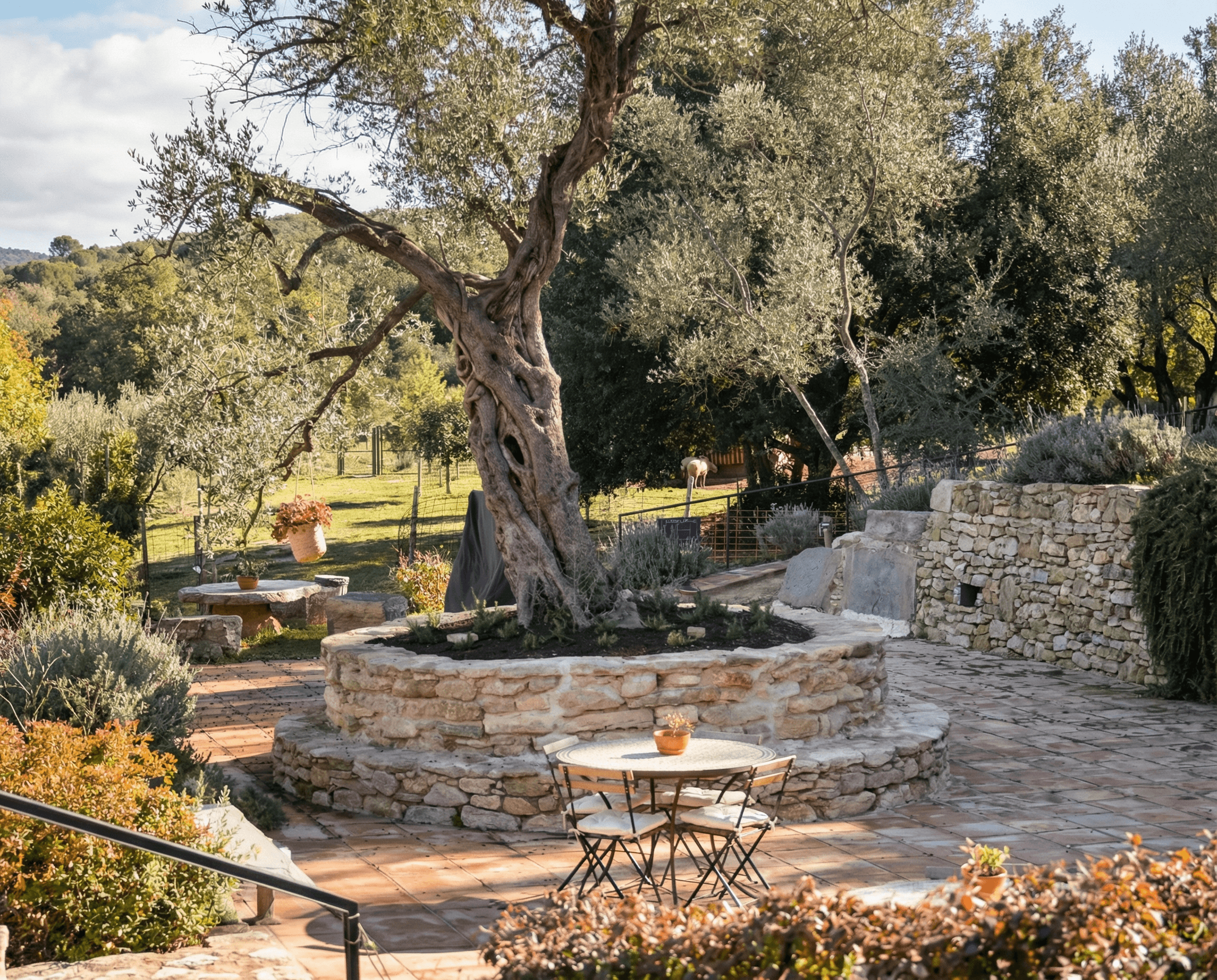
You become part of it

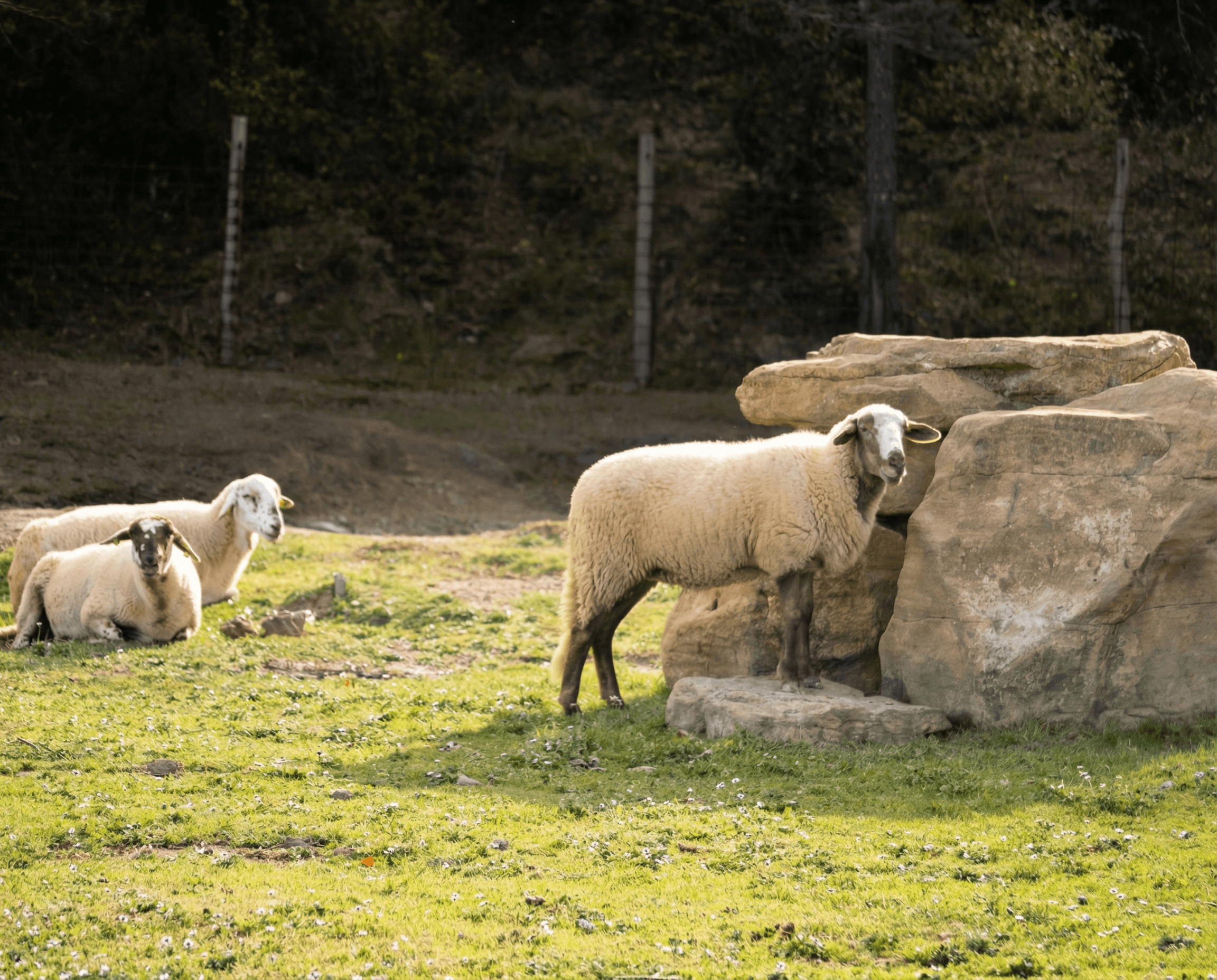
You find Can Buch at the end of a forest path, without electricity from the grid, without water from a pipe, without any of the infrastructure we take for granted. What it has instead is a garden that feeds the kitchen, a kitchen that feeds the people, and eight people who chose to stay because this place became home. Guests arrive as visitors and leave having shared meals and met people they weren't expecting to meet. That's what the whole place was built for.

You become part of it

You find Can Buch at the end of a forest path, without electricity from the grid, without water from a pipe, without any of the infrastructure we take for granted. What it has instead is a garden that feeds the kitchen, a kitchen that feeds the people, and eight people who chose to stay because this place became home. Guests arrive as visitors and leave having shared meals and met people they weren't expecting to meet. That's what the whole place was built for.

Can Buch

1

/

3

Kitchen installation

Meet

the hosts

Gerard was 21 years old and heading toward a professional football career when a diagnosis of rare bone cancer redirected everything. He stepped away from the city, moved to the Catalan countryside, and spent four years in a small farmhouse with a vegetable garden, a few chickens, and the kind of quiet that forces real thinking.

He spent those years reading relentlessly about permaculture, nutrition, geobiology, holistic health. He began to see all these disciplines as one interconnected system. When he eventually came across a collapsed masía half-swallowed by the hillside, he felt like it was his blank page. Over three years, more than 300 volunteers and neighbors helped him rebuild it. Some of them never left.

What you will

find here
Autonomy

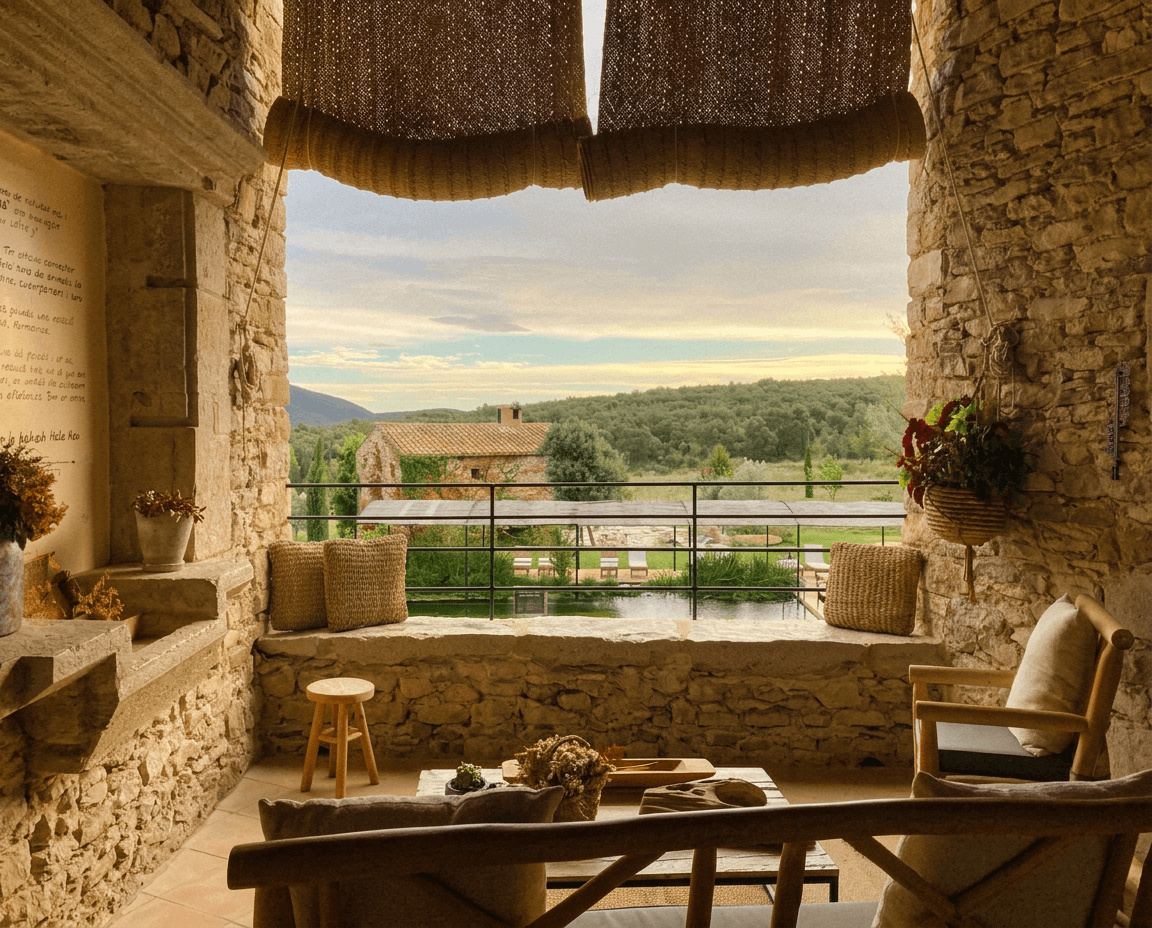
A masía that generates its own energy from solar panels, collects rainwater from the roofs, heats itself with wood from its own forest, and returns wastewater to the soil through natural filtration. Nothing comes from the grid. Nothing is wasted.

Community

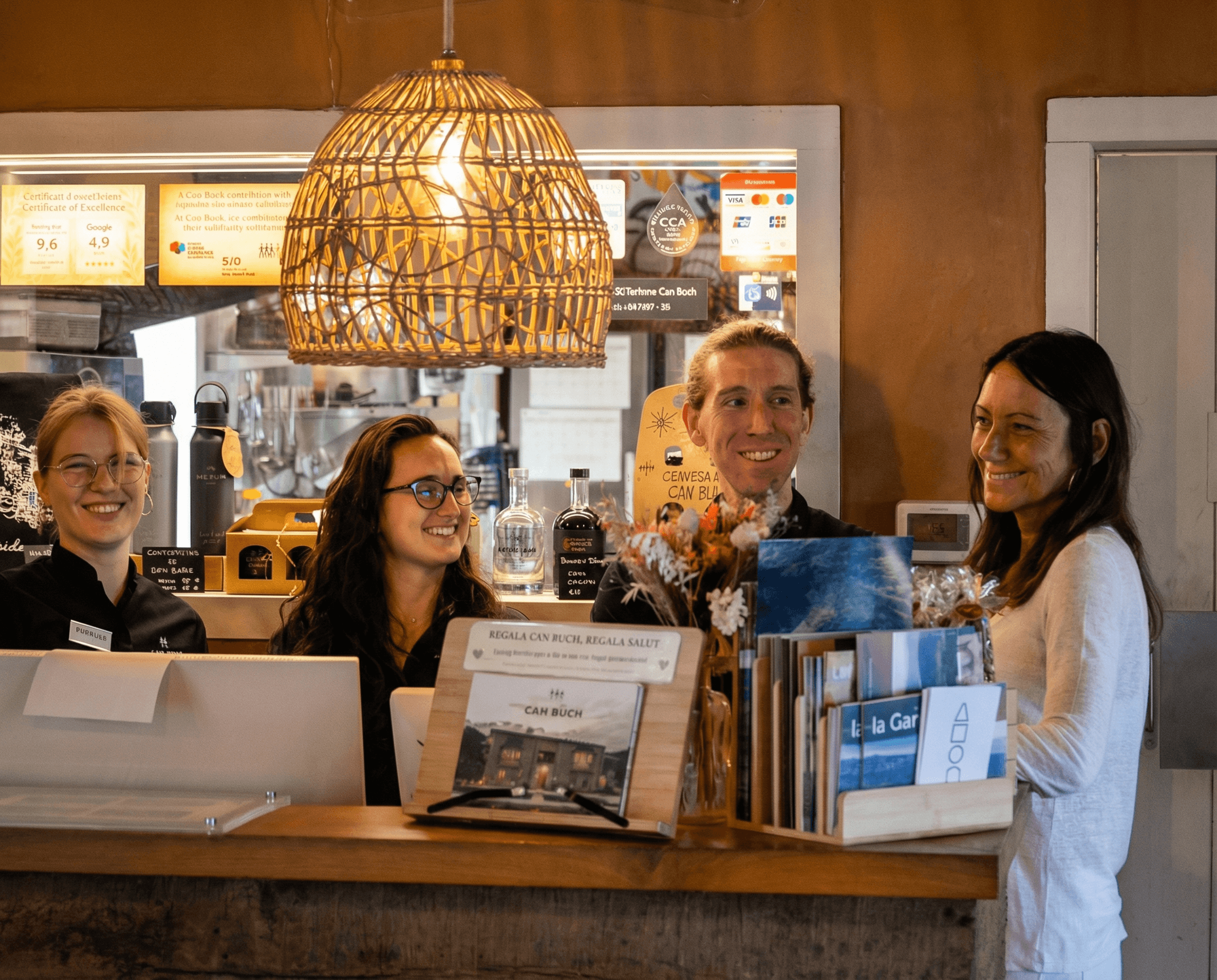
Eight people live and work here - cooking, farming, building, hosting - not as a coordinated staff but as a genuine community that formed over years of shared work. Guests eat with them, spend time around them, and almost always feel it.

Slowness

Days here follow the light and the land, not a schedule. Meals are cooked from what the garden produced that morning. The silence is the kind that still carries sound - wind, animals, the forest doing what forests do.

Can Buch

What began with a man stepping away from a life that had broken him became, in time, a masía rebuilt by a community that refused to dissolve when the work was done, and a farm that runs entirely on what the land provides.

Can Buch didn't emerge from a business plan. It grew the way the things built to last usually do - slowly, collectively, with deep roots.

The rebuilding of Can Buch was, from the start, something other than construction. Over three years, more than 300 volunteers, neighbors, friends, and passing travelers arrived to help - carrying stones, raising walls, mixing lime, learning techniques that most of the world had forgotten. "Every element - the natural materials, the ancestral methods, the choices guided by feng shui, geobiology, and food sovereignty - reflects a philosophy shared rather than imposed." Can Buch wasn't built by one person. It was created by many, each leaving a trace of themselves in the process.

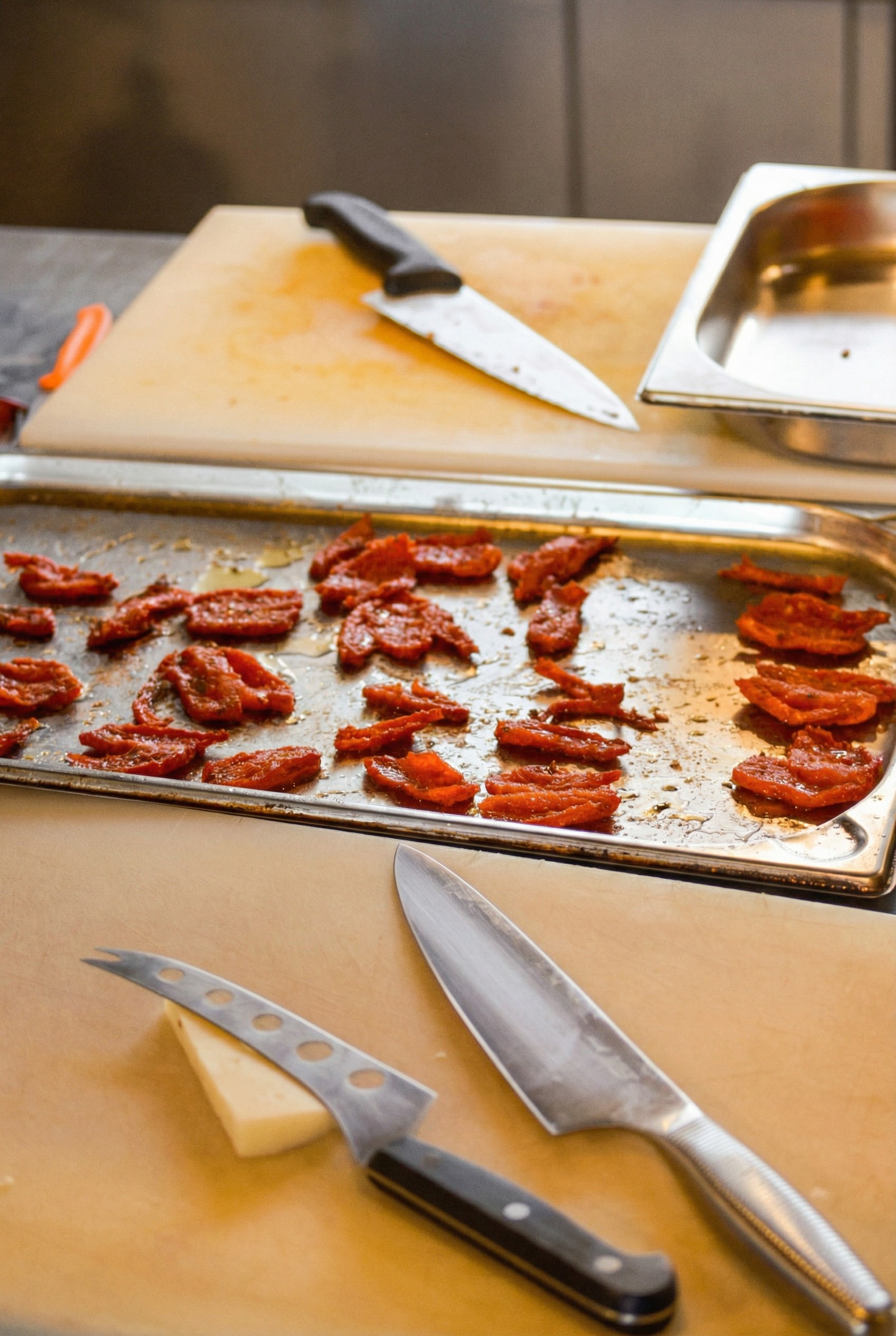
What's remarkable is that the community didn't dissolve once the masía opened its doors in 2020. Fede is the clearest example. He came from Argentina through Workaway hoping to learn how to build a house. What was meant to be a few months became three years living alongside Gerard and the early volunteers - cooking together, sharing makeshift rooms and, for a time, tents pitched inside the barely standing shell of the old masía. When Can Buch finally opened, he didn't leave. "The kitchen he cooks in today is framed by walls he built with his own hands, stone by stone. Every plant in the garden - every herb, every tomato vine, every tree - was planted by him and Gerard's team." He arrived with no culinary experience and taught himself dish by dish, often learning from guests who happened to be chefs. It took him a year and a half to master the perfect tortilla de patata. Today, he leads the kitchen, brews his own beer, presses his own oil, and cooks almost entirely from what grows on the land.


Kitchen installation


At the center of it all is Lali - Gerard's mother, the quiet anchor of the house. "Attentive, meticulous, genuinely caring, she brings a steadiness that everyone here leans on. She notices what people need before they ask and her way of tending to details makes the entire place feel held." When you sit at the long table with them - watching them cook together, exchange jokes, share plates, move around each other - it becomes clear that this isn't a team running an eco-lodge. It's a family that built one.


The rebuilding of Can Buch was, from the start, something other than construction. Over three years, more than 300 volunteers, neighbors, friends, and passing travelers arrived to help - carrying stones, raising walls, mixing lime, learning techniques that most of the world had forgotten. "Every element - the natural materials, the ancestral methods, the choices guided by feng shui, geobiology, and food sovereignty - reflects a philosophy shared rather than imposed." Can Buch wasn't built by one person. It was created by many, each leaving a trace of themselves in the process.

What's remarkable is that the community didn't dissolve once the masía opened its doors in 2020. Fede is the clearest example. He came from Argentina through Workaway hoping to learn how to build a house. What was meant to be a few months became three years living alongside Gerard and the early volunteers - cooking together, sharing makeshift rooms and, for a time, tents pitched inside the barely standing shell of the old masía. When Can Buch finally opened, he didn't leave. "The kitchen he cooks in today is framed by walls he built with his own hands, stone by stone. Every plant in the garden - every herb, every tomato vine, every tree - was planted by him and Gerard's team." He arrived with no culinary experience and taught himself dish by dish, often learning from guests who happened to be chefs. It took him a year and a half to master the perfect tortilla de patata. Today, he leads the kitchen, brews his own beer, presses his own oil, and cooks almost entirely from what grows on the land.


Kitchen installation


At the center of it all is Lali - Gerard's mother, the quiet anchor of the house. "Attentive, meticulous, genuinely caring, she brings a steadiness that everyone here leans on. She notices what people need before they ask and her way of tending to details makes the entire place feel held." When you sit at the long table with them - watching them cook together, exchange jokes, share plates, move around each other - it becomes clear that this isn't a team running an eco-lodge. It's a family that built one.


What began with a man stepping away from a life that had broken him became, in time, a masía rebuilt by a community that refused to dissolve when the work was done, and a farm that runs entirely on what the land provides.

Can Buch didn't emerge from a business plan. It grew the way the things built to last usually do - slowly, collectively, with deep roots.

The rebuilding of Can Buch was, from the start, something other than construction. Over three years, more than 300 volunteers, neighbors, friends, and passing travelers arrived to help - carrying stones, raising walls, mixing lime, learning techniques that most of the world had forgotten. "Every element - the natural materials, the ancestral methods, the choices guided by feng shui, geobiology, and food sovereignty - reflects a philosophy shared rather than imposed." Can Buch wasn't built by one person. It was created by many, each leaving a trace of themselves in the process.

What's remarkable is that the community didn't dissolve once the masía opened its doors in 2020. Fede is the clearest example. He came from Argentina through Workaway hoping to learn how to build a house. What was meant to be a few months became three years living alongside Gerard and the early volunteers - cooking together, sharing makeshift rooms and, for a time, tents pitched inside the barely standing shell of the old masía. When Can Buch finally opened, he didn't leave. "The kitchen he cooks in today is framed by walls he built with his own hands, stone by stone. Every plant in the garden - every herb, every tomato vine, every tree - was planted by him and Gerard's team." He arrived with no culinary experience and taught himself dish by dish, often learning from guests who happened to be chefs. It took him a year and a half to master the perfect tortilla de patata. Today, he leads the kitchen, brews his own beer, presses his own oil, and cooks almost entirely from what grows on the land.


Kitchen installation


At the center of it all is Lali - Gerard's mother, the quiet anchor of the house. "Attentive, meticulous, genuinely caring, she brings a steadiness that everyone here leans on. She notices what people need before they ask and her way of tending to details makes the entire place feel held." When you sit at the long table with them - watching them cook together, exchange jokes, share plates, move around each other - it becomes clear that this isn't a team running an eco-lodge. It's a family that built one.


The rebuilding of Can Buch was, from the start, something other than construction. Over three years, more than 300 volunteers, neighbors, friends, and passing travelers arrived to help - carrying stones, raising walls, mixing lime, learning techniques that most of the world had forgotten. "Every element - the natural materials, the ancestral methods, the choices guided by feng shui, geobiology, and food sovereignty - reflects a philosophy shared rather than imposed." Can Buch wasn't built by one person. It was created by many, each leaving a trace of themselves in the process.

What's remarkable is that the community didn't dissolve once the masía opened its doors in 2020. Fede is the clearest example. He came from Argentina through Workaway hoping to learn how to build a house. What was meant to be a few months became three years living alongside Gerard and the early volunteers - cooking together, sharing makeshift rooms and, for a time, tents pitched inside the barely standing shell of the old masía. When Can Buch finally opened, he didn't leave. "The kitchen he cooks in today is framed by walls he built with his own hands, stone by stone. Every plant in the garden - every herb, every tomato vine, every tree - was planted by him and Gerard's team." He arrived with no culinary experience and taught himself dish by dish, often learning from guests who happened to be chefs. It took him a year and a half to master the perfect tortilla de patata. Today, he leads the kitchen, brews his own beer, presses his own oil, and cooks almost entirely from what grows on the land.


Kitchen installation


At the center of it all is Lali - Gerard's mother, the quiet anchor of the house. "Attentive, meticulous, genuinely caring, she brings a steadiness that everyone here leans on. She notices what people need before they ask and her way of tending to details makes the entire place feel held." When you sit at the long table with them - watching them cook together, exchange jokes, share plates, move around each other - it becomes clear that this isn't a team running an eco-lodge. It's a family that built one.


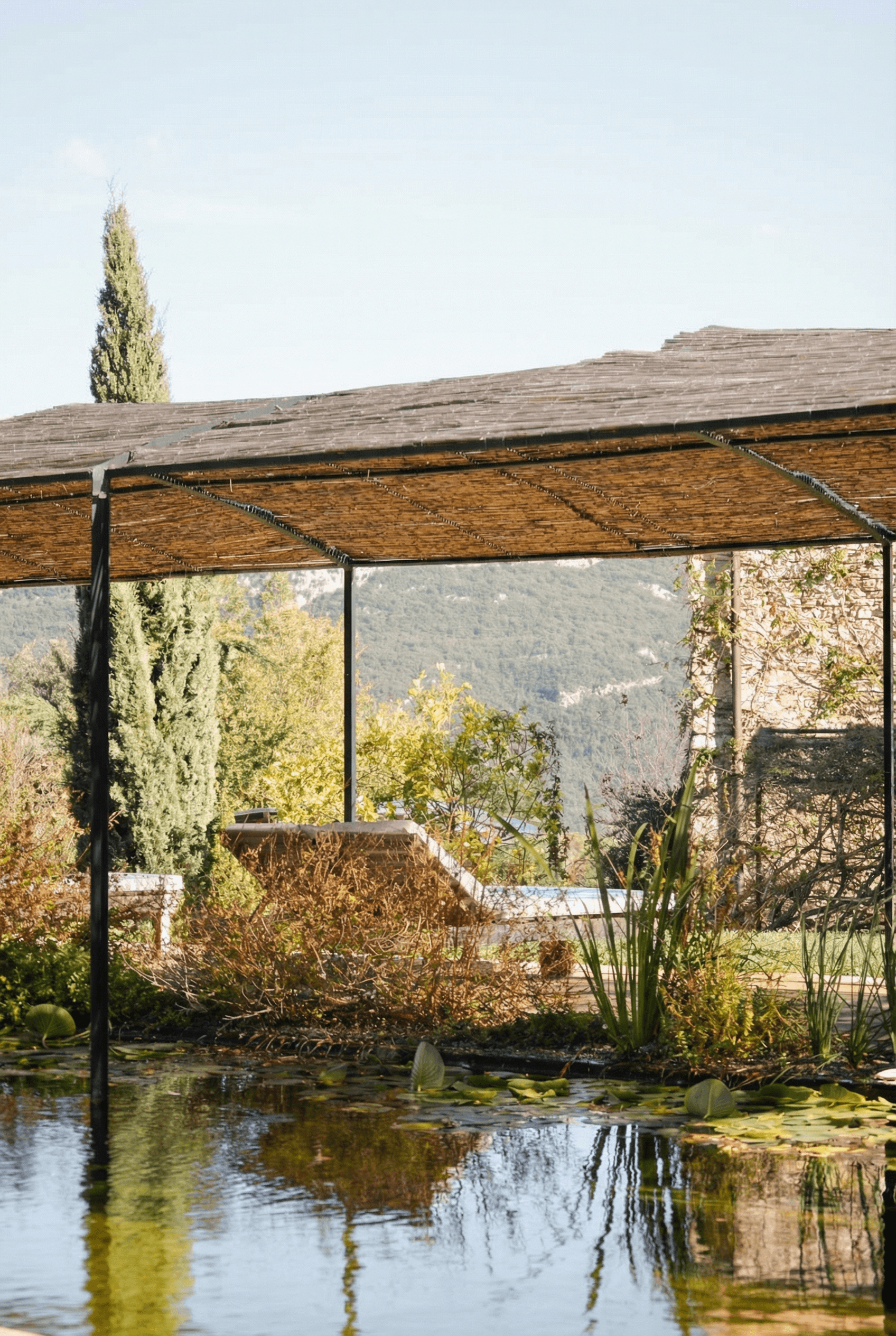
At the end of an improbable road, a little corner of paradise with its flowers, its animals and superb spaces to stroll or relax. With its sober, bright and comfortable rooms, its amazing swimming pool where you rub shoulders with water lilies and frogs and its welcoming restaurant.

Jean-François

Jean-François

Hotel View

Step

inside

Pictures can't capture everything.

Getting

there

Can Buch sits in the forested hills of La Garrotxa, a volcanic region of dense woodland and quiet valleys about two hours north of Barcelona.

From Barcelona, take the C-17 north toward Ripoll, then continue into La Garrotxa following signs toward Olot. From there, follow local roads into the hills - the final stretch is through forest.

From Girona, head west on the C-66 through Banyoles toward Olot, then follow directions into the surrounding hills. Allow around 1 hour.

Can Buch will share precise coordinates on booking.


Get in

touch

Questions about what a stay at Can Buch actually looks like day to day? Interested in the farm, the food, or the philosophy behind it? Planning something for a group that wants more than a hotel? Solwyn can help you figure out the details and make sure the experience matches what you're looking for.


Brand Icon

About us

We tell the stories behind extraordinary places so you can travel with intention. Discover stays shaped by restoration, respect and real connection. Where every choice is a conscious one.

Know a hidden gem?

Pages

Privacy Policy

Terms of Service

Contact info

hello@solwyn.co

+33 7 77 25 75 97

Based in Barcelona

Follow us on

Facebook

Instagram

Pinterest

TikTok

Never miss a new find

Brand Icon

About us

We tell the stories behind extraordinary places so you can travel with intention. Discover stays shaped by restoration, respect and real connection. Where every choice is a conscious one.

Know a hidden gem?

Pages

Privacy Policy

Terms of Service

Contact info

hello@solwyn.co

+33 7 77 25 75 97

Based in Barcelona

Follow us on

Facebook

Instagram

Pinterest

TikTok

Never miss a new find

Brand Icon

About us

We tell the stories behind extraordinary places so you can travel with intention. Discover stays shaped by restoration, respect and real connection. Where every choice is a conscious one.

Know a hidden gem?

Pages

Privacy Policy

Terms of Service

Contact info

hello@solwyn.co

+33 7 77 25 75 97

Based in Barcelona

Follow us on

Facebook

Instagram

Pinterest

TikTok

Never miss a new find