Inside Can Buch
A living sanctuary built stone by stone

Deep in the forests of La Garrotxa, Can Buch is a fully off-grid masía rebuilt stone by stone - a living farm community of eight people led by the retired football player Gerard Bofill.
Hidden in the hills of Garrotxa, Can Buch isn’t a place you simply book, it’s a place that receives you. The moment you arrive, you sense a quiet world already in motion, shaped by eight people who live and work side by side as a genuine community.

At its beginning is Gerard, a former professional football player whose life veered off course early, leading him to a collapsed masía that became both refuge and rebirth. What followed was a full-on collective project: volunteers, friends, neighbors - more than 300 people - came together over three years to rebuild the house stone by stone. Today, Can Buch stands as more than an off-grid farm. It’s a living ecosystem, a place where the lines between hosting and home blur, and where visitors feel less like guests and more like temporary members of a story still unfolding.
Before Can Buch, Gerard’s life followed a clear path: a rising football career, a future neatly outlined. That trajectory changed at 21, when he was diagnosed with a rare tibia cancer and told he might not survive. It was a moment that forced a complete reconsideration of how, and where, he wanted to live. Confronted with a diagnosis that would derail anyone’s sense of direction, he stepped away from the city and the life he knew. Without fully understanding why, he felt drawn toward a quieter landscape - a return to something more elemental. He sought room to breathe, to slow down, and to regain clarity. The countryside offered that distance: a setting where he could focus on recovery and make sense of what his life had become.
Gerard moved with his girlfriend into a small farmhouse deep in the Catalan countryside. For four years, life narrowed to what was essential: a vegetable garden, a few chickens, long stretches of quiet, and a way of living that began to restore him. Remission didn’t arrive by coincidence - Gerard is clear about that. With space and time, he began questioning the pace and expectations that had shaped his life until then, noticing how different his body felt away from the intensity of the city. Stepping out of that rhythm, reconnecting with nature, eating simply, living slowly: this shift brought his body and mind back into alignment.
During this period, he immersed himself in reading: hundreds of books on permaculture, nutrition, holistic health, spirituality, geobiology. Far from separate fields, he saw how deeply they intertwined: soil, food, environment, and wellbeing forming a single, interdependent system. These concepts became the framework through which he understood balance, health, and place. Each occasional return to the city only reinforced the contrast. What had once felt familiar now felt misaligned. The countryside was no longer a temporary refuge, it was the only environment that made sense. Gradually, a clear idea emerged: if this way of living had restored him, perhaps he could build a place shaped by the same principles. First for himself - then, eventually, to share with others.
One day, while hiking through the forest, Gerard discovered a plot where a masía had collapsed into the hillside - a scatter of stones almost swallowed by vegetation. It was exactly what he had been searching for: a blank page where he could apply everything he had learned during those years of study and introspection.
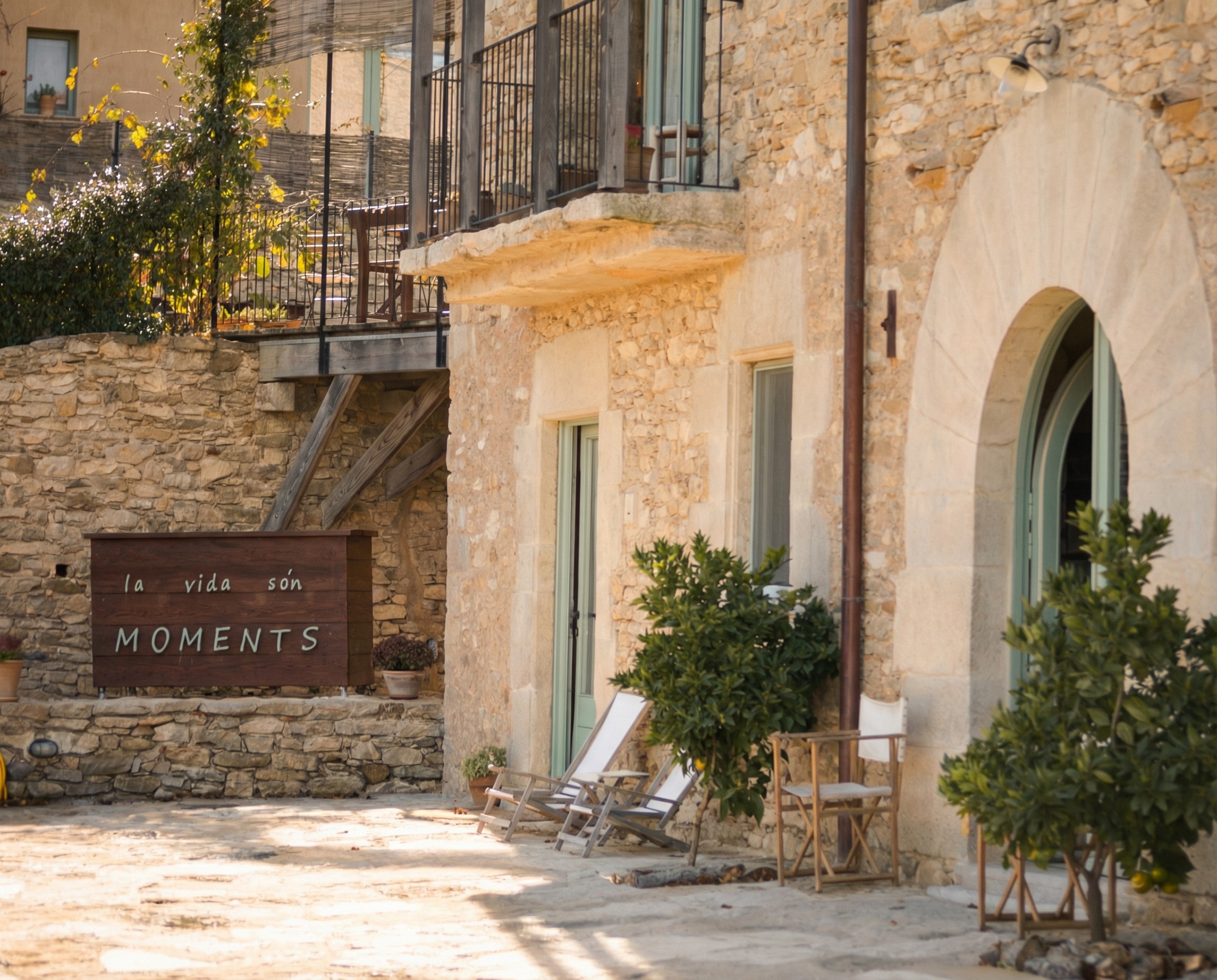
The rebuilding of Can Buch was never just a construction project, it was an act of creation in the truest sense. What began as a collapsed masía hidden in the forest became a gathering point for people who felt compelled to be part of something purposeful. Over three years, more than 300 volunteers, neighbors, friends, and passing travelers arrived to help, each adding their time, energy, and craft. Together, they carried stones, raised walls, mixed lime, and shaped a place that was as much about intention as it was about architecture.
Every element - the natural materials, the traditional methods, the choices guided by feng shui, geobiology, and food sovereignty - reflects a philosophy shared rather than imposed. Can Buch wasn’t built by one person; it was created by many, each leaving a trace of themselves in the process. What’s remarkable is that the community that built Can Buch didn’t dissolve once the masía opened its doors in 2020. Many projects lose their spirit when construction ends; this one didn’t. A handful of volunteers who had arrived for a brief season stayed, drawn not by contracts but by the rare feeling of belonging to something meaningful.
Fede is perhaps the clearest example. He first came from Argentina through WorkAway, hoping to learn how to build a house. What was meant to be a few months became three years living alongside Gerard and the early volunteers, cooking together, living together, sharing makeshift rooms and for a time, tents pitched inside the barely standing shell of the old masía. When Can Buch finally opened, he didn’t leave. By then, he had become part of its architecture. The kitchen he cooks in today is framed by walls he built with his own hands, stone by stone. Every plant in the garden - every herb, every tomato vine, every tree - was planted by him and Gerard’s incredible team.
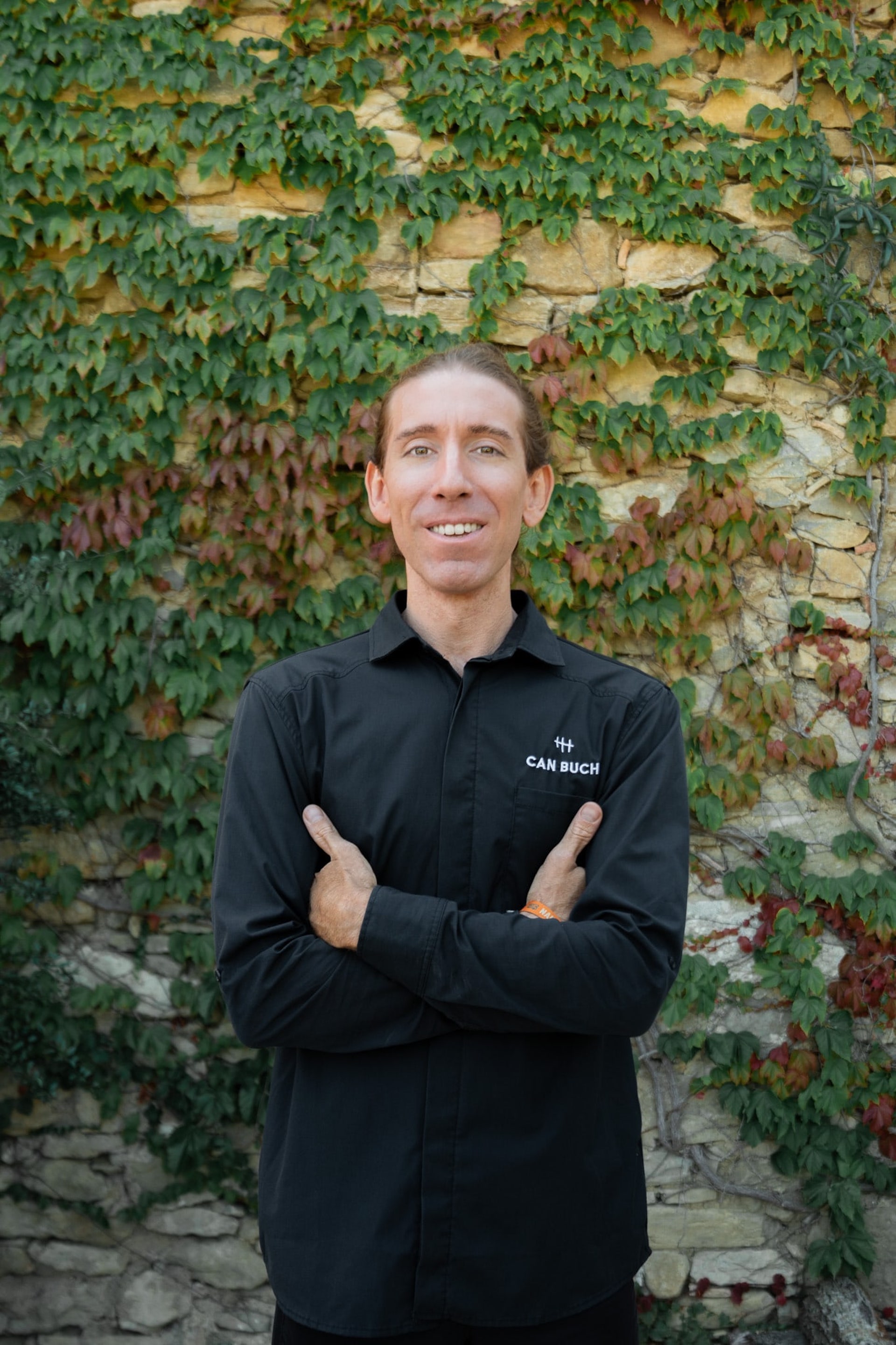
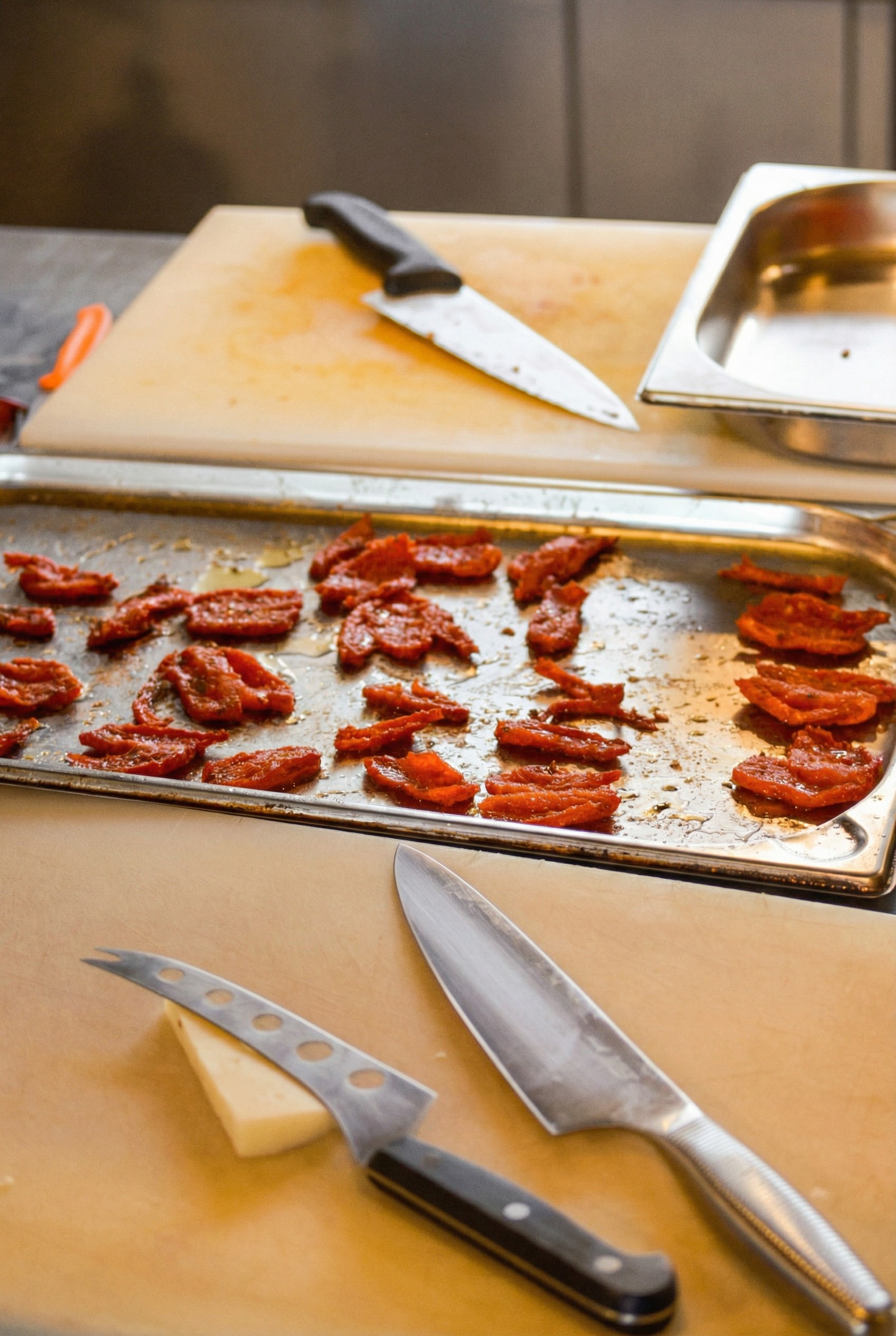
The landscape they tend together is not a concept; it is physical work, carried out day after day, season after season. He arrived with no culinary experience, yet taught himself dish by dish, often learning from guests who happened to be chefs. It took him a year and a half to master the perfect tortilla and it shows. Today, he leads the kitchen with a confidence earned slowly, brewing his own beer, pressing his own oil and cooking almost entirely from what grows on the land.
And Fede is not alone. Eight staff members live here full-time, each carrying a part of the project’s soul. Nina, who came as a volunteer and stayed because the rhythm felt like home. David, caring for the farm and animals with unwavering attention and warmth. Ilyas, whose generosity and calm presence make guests feel instantly at ease. Khitam, ensuring every space feels cared for and welcoming. Ferran, whose hands know the land like a map. Marc, tending the gardens with a devotion that shows in every leaf. Laura, bringing quiet precision to everything she touches. Oriol, restoring what needs repair before anyone notices.
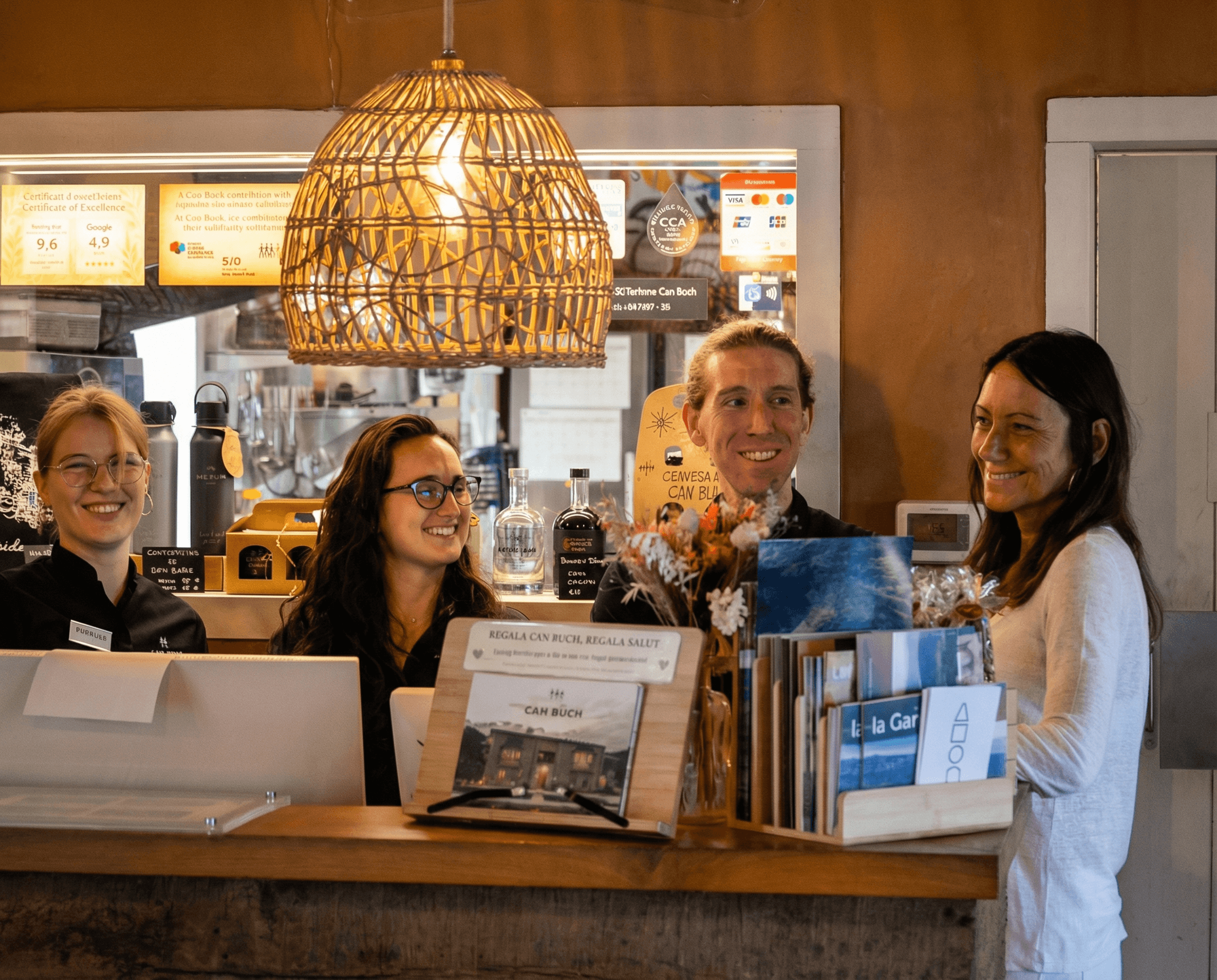
At the center of it all is Gerard’s mother, Lali - the quiet anchor of the house, whose presence softens the rhythm of daily life. Attentive, meticulous, and genuinely caring, she brings a steadiness that everyone here leans on, the kind of warmth that can’t be taught or replicated. She notices what people need before they ask, and her way of tending to details makes the entire place feel held.
Together, they form a community that feels as if it emerged on its own, shaped by time and shared purpose. When you sit at the long table with them, watching them cook together, exchange jokes, share plates, and hug as they move around each other, it becomes clear: this isn’t a team running an eco-lodge. It’s a family that built one, and she is its heart. And it’s that feeling of being welcomed into a living, breathing community that guests remember long after they leave, and that keeps them coming back.
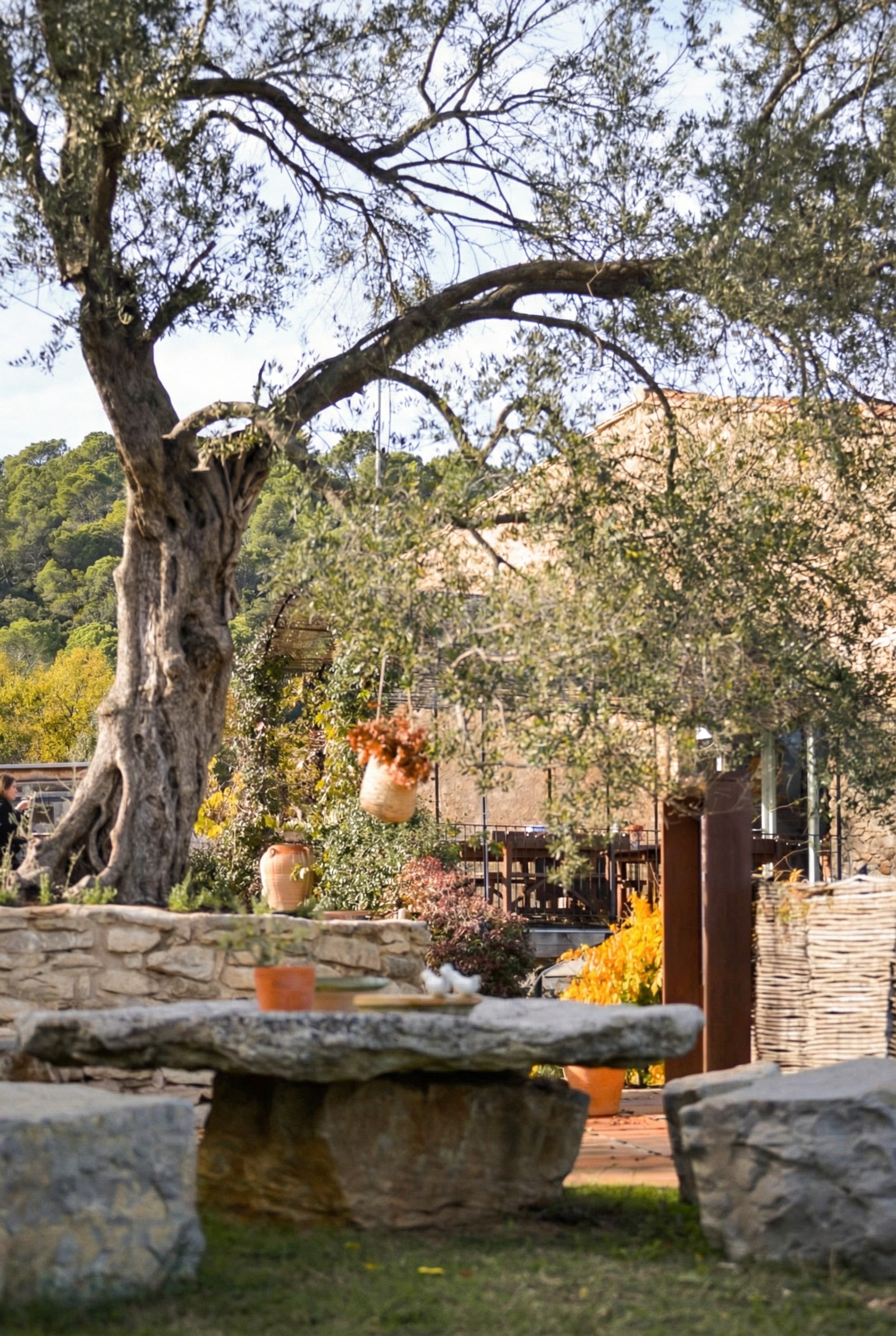
Sustainability at Can Buch is the architecture of the entire project. Built in the middle of the forest, the masía had no access to public electricity, water or sewage, which Gerard and the team treated as an invitation to create a fully autonomous ecosystem. Today, Can Buch runs on 100% renewable energy generated by photovoltaic panels stored in battery banks; rainwater is collected from the roofs, naturally filtered through sand and gravel, then pumped uphill with solar power to flow back down to the house with perfect pressure. Heating and hot water come from biomass, wood harvested responsibly from their own forest, following a management plan that strengthens the land and prevents fires. Even wastewater completes a natural cycle: filtered through gravel and plants, it returns to irrigate fruit trees and fields.
Food follows the same closed-loop logic. The gardens, orchards, animals, compost, seeds and kitchen all feed into one another, forming a living system where nothing is wasted and everything has a purpose. What grows here nourishes the people who work and stay at Can Buch; what remains nourishes the soil again. It’s permaculture not as a trend, but as a practice, improving the ecosystem day after day, allowing biodiversity to flourish through bird nests, insect hotels, beehives and flowering corridors. The result is an eco-friendly farmhouse that proves another way of living is possible: slower, circular, respectful, rooted in the land.
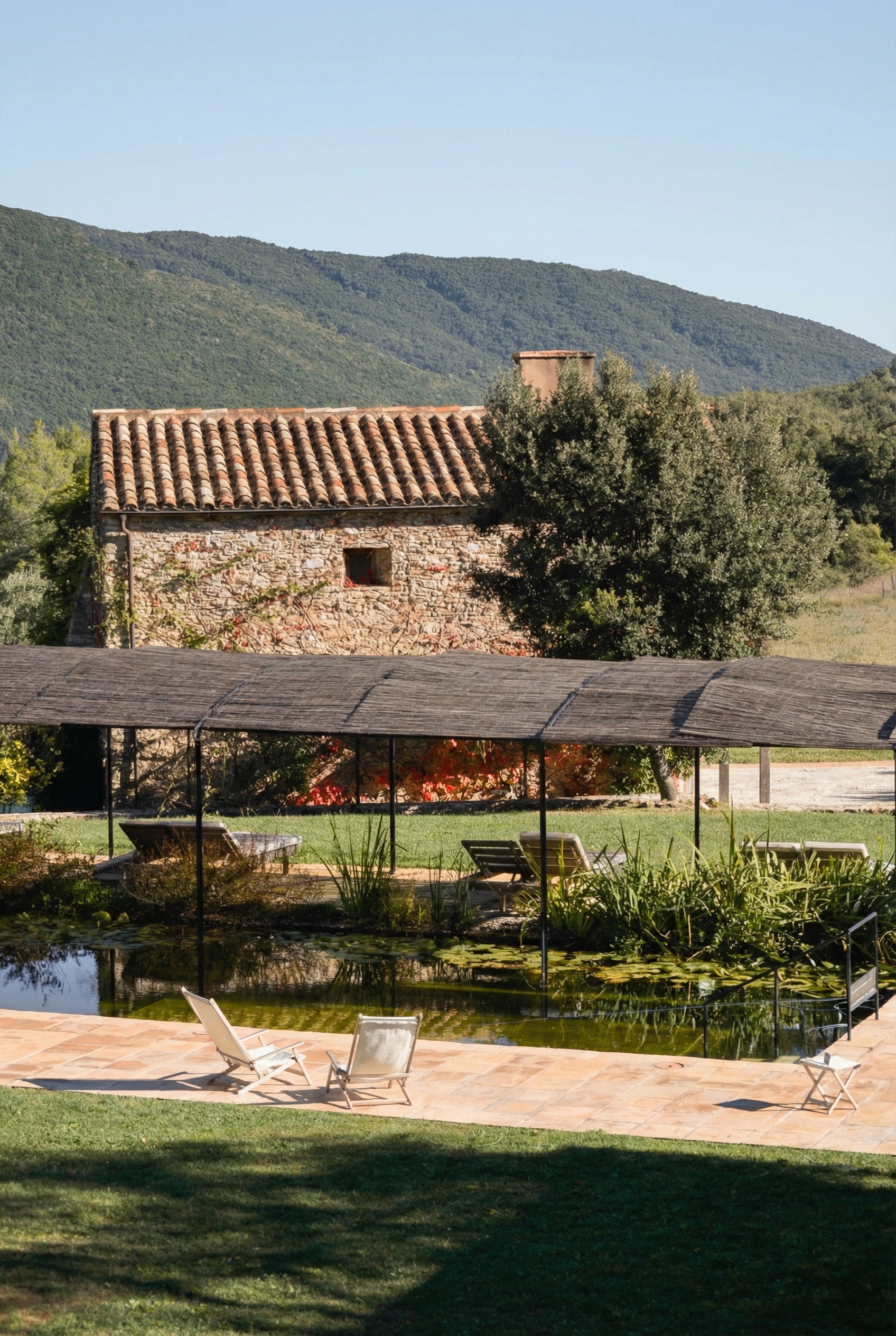
The design of Can Buch is not an aesthetic layer added at the end, it is the physical expression of the values that shaped its creation. Every choice, from the materials to the layout, follows a simple idea: a home should support life, not complicate it. Gerard and the team rebuilt the masía using natural elements found on the land - local stone, lime, clay, wood from the surrounding forest - guided by ancestral construction techniques, feng shui principles, and geobiology. The result is a building that doesn’t impose itself on the landscape, but belongs to it. Inside, the spaces feel grounded and intentional. Light is used as a design tool; textures are warm, honest, unpolished; the color palette echoes the hills outside. There is clarity, rooms that invite rest, common areas that encourage conversation, and details that reveal the hand of the people who built them.
Can Buch is designed to slow people down. To reconnect them to the essentials: food grown on-site, light that shifts with the day, silence that still carries the sound of the wind. It is a place where design doesn’t distract but supports. A framework for presence, balance, and genuine connection. In the end, the beauty of Can Buch isn’t in its architecture alone, but in the coherence between what it stands for and how it was built. A place created with intention. A home shaped by many hands. A philosophy made tangible, stone by stone.
This is for you if…
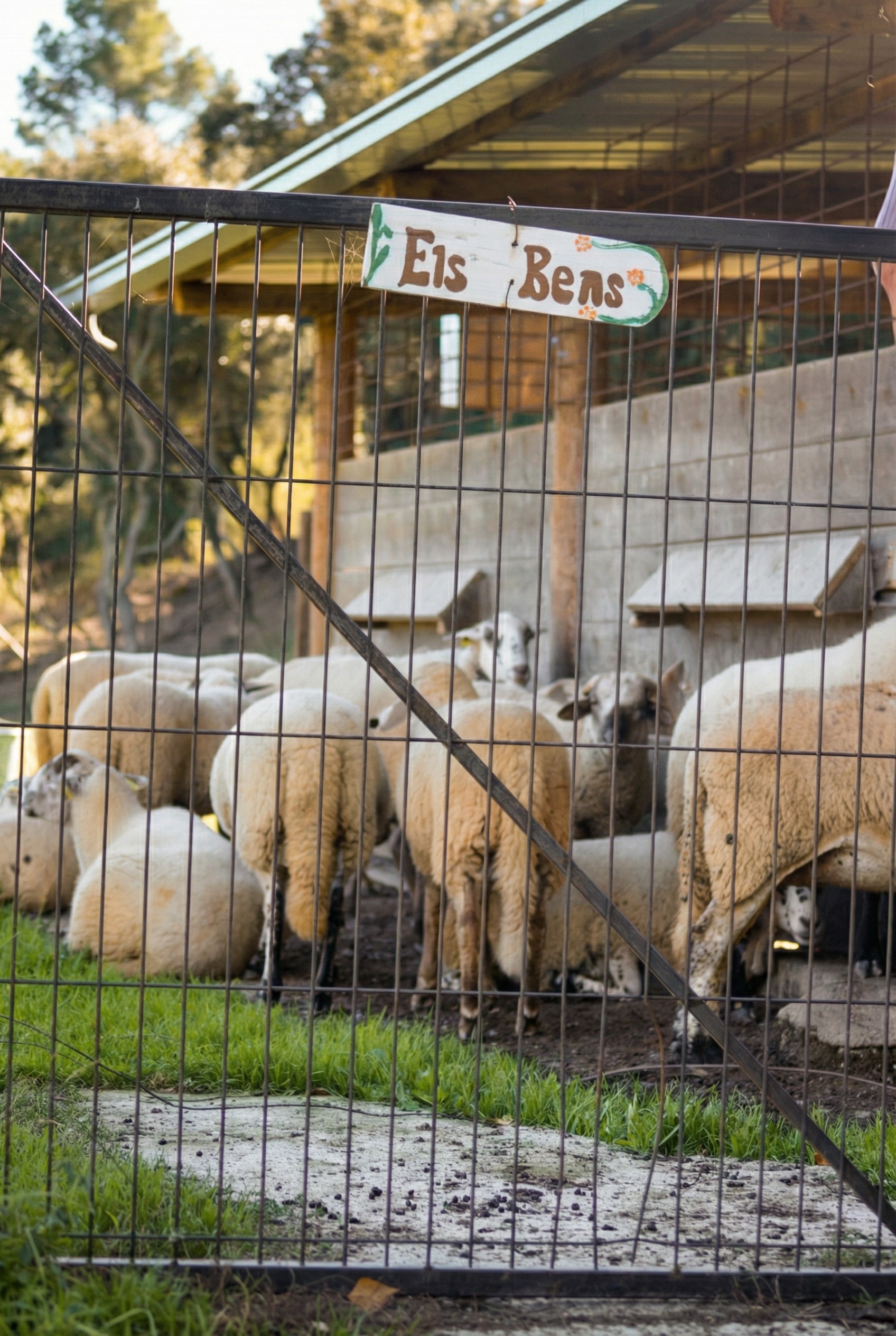
... you’re drawn to places that feel grounded, where the pace eases naturally and the days unfold without urgency. … you appreciate the honesty of rural life: vegetables pulled from the garden that morning, paths that lead into quiet forests, meals cooked with intention rather than technique. … you’re curious about how things work behind the scenes: where the water comes from, how the energy is produced, how a place can run in harmony with its surroundings. … you find comfort in the quiet company of animals - rabbits in the grass, chickens by the path, sheep in the fields, cats asleep in the sun, and dogs greeting you like an old friend.
Can Buch is for travelers who want to meet a way of living, not just a destination - for those looking to reconnect with nature, simplicity, and real community.