Where to stay near Girona - A guide to the Catalan countryside
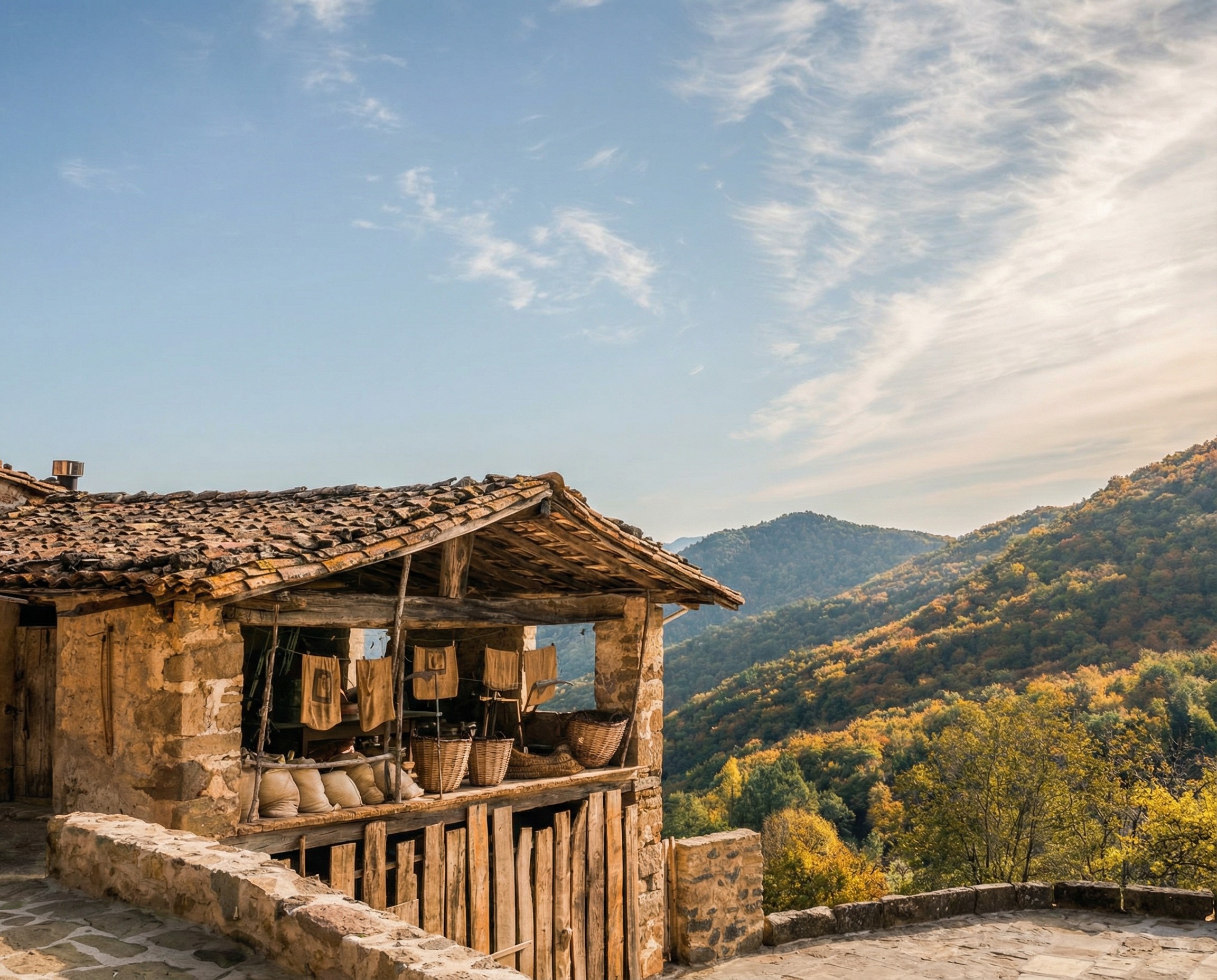
Girona sits between a plain, a volcanic range and a coast, and the countryside changes character every twenty minutes. Explore five stays across three of those landscapes, and the case for choosing one over another.
Twenty minutes out of Girona the road forks, and you have to decide which countryside you want.
We drive up from Barcelona most months, or we just take the AVE and then a rented car from the station - because the train takes thirty-eight minutes and the motorway takes an hour and a quarter and we are not sentimental about it. The mistake most people make is to treat Girona as the coast's waiting room. They land either at Barcelona or at Girona directly, drive straight through to Begur or Calella, and never see the countryside they crossed to get there. That countryside is the reason we started here. It is also, in August, the emptier half of the province.
The land around the city is several landscapes molding into one. The plain of the Empordà runs east towards the sea: wheat, poplars, stone villages, and the tramuntana coming down off the Pyrenees. To the west and north it lifts into La Garrotxa, wooded and volcanic, more than forty cones under the beech. In between sits Girona itself, a small city with a very good old quarter and a habit of being underestimated.
Each one gives you a different week.
Five places in our collection sit within an hour of the city. That was not planned, it is simply where we started looking, because it is the countryside we know best.
The —— country
Geography decides the stay here more than design does. South-east of the city the Gavarres massif rises covered in cork oak and holm oak, dry and low and warm, with the sea forty minutes beyond it. Due north-west the Llémena valley runs up towards Rocacorba, narrower and greener, one road with a river beside it. Keep going and you cross into La Garrotxa proper, where the valleys close in and each keeps its own weather. The Alta Garrotxa, at the top, is the part that still feels remote: Mare de Déu del Mont on the skyline, beech woods, villages of forty people or less.
None of it is far apart. Gavarres to Alta Garrotxa is an hour and ten. But they read as different countries, and they hold so much to explore.
The —— hills
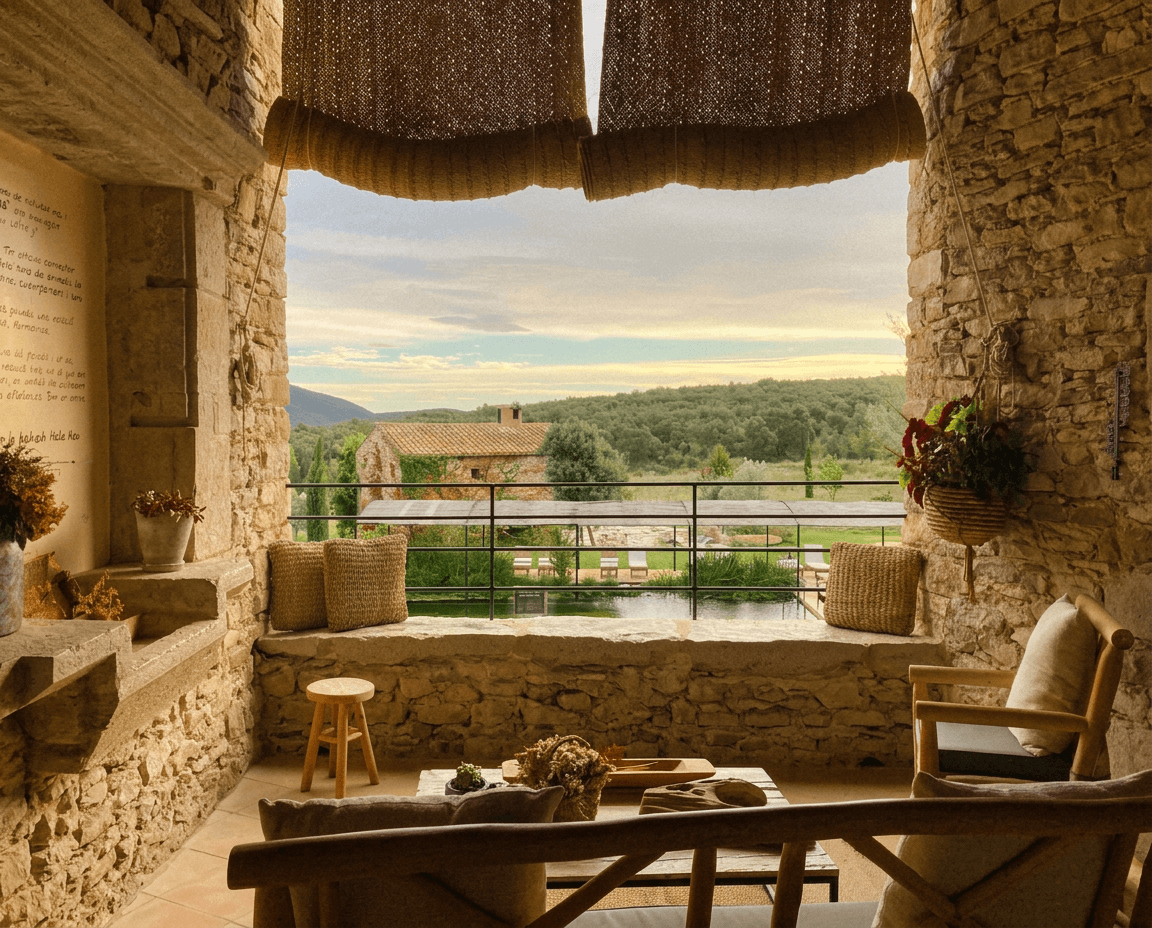
Mas Margot is an eighteenth-century masía and barn in the Vall del Llémena, above Llorà, restored by Michèle and Julio into eight suites. It is the kind of restoration that meant to preserve what makes the place unique: stone, beams, light, forest on four sides, a river close enough to hear from the terrace. Michèle and Julio are there every day, which is the reason it works. Their dynamic is the soul of Mas Margot, while the house chef Fede will make sure you remember every dish you tried during your stay there.
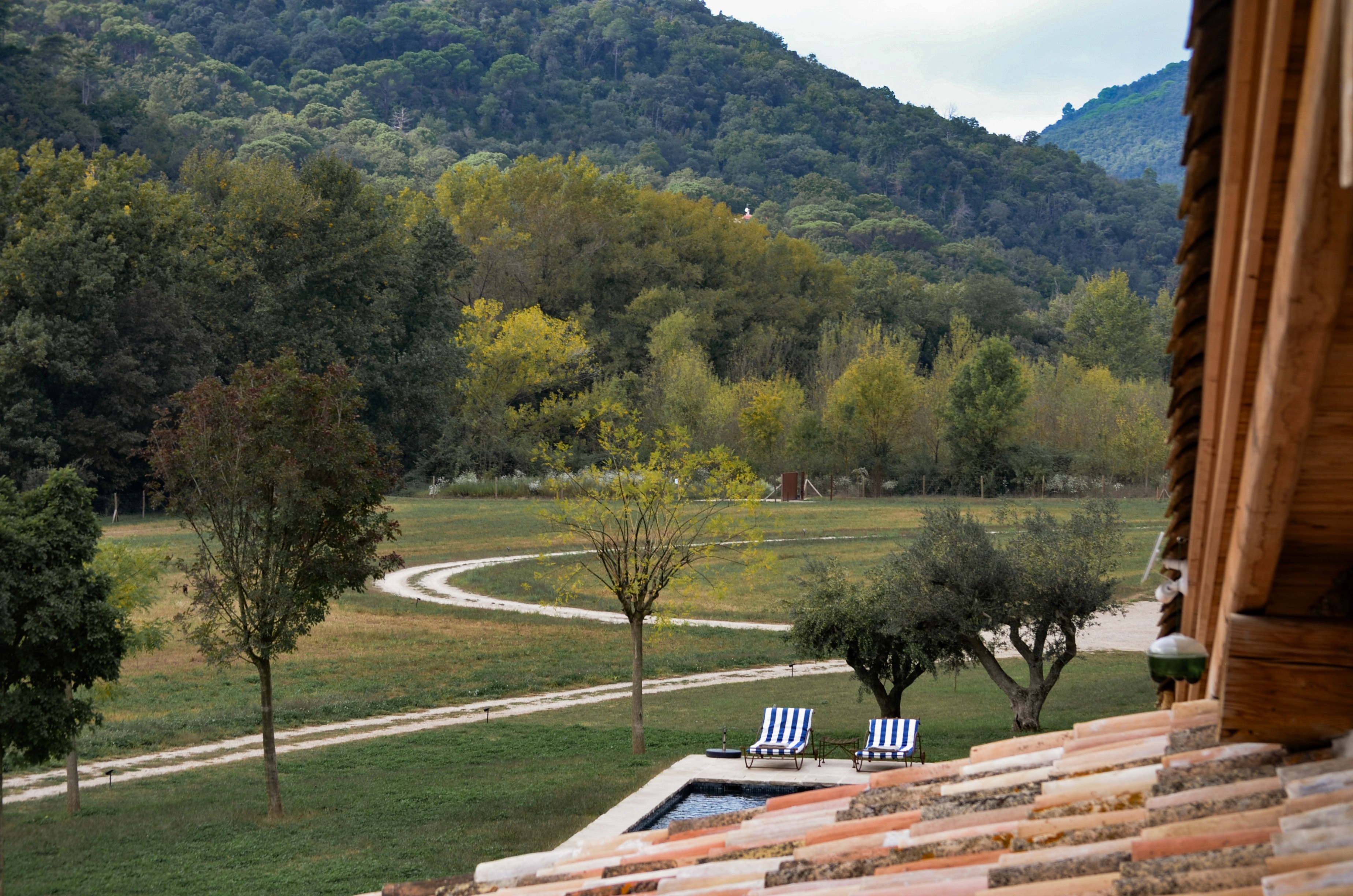
Mas Oms is thirty-five minutes south-east and a century older, a fifteenth-century farmhouse in the Gavarres on top of Sant Mateu de Montnegre. Six rooms. A heated saltwater pool cut into the hillside, long views across the massif, and a kitchen that is one of the main arguments for going: organic, largely from the garden, cooked by the house. Céline and Julien lean towards rest rather than activity, though they also run their own reiki and meditation-focused retreats year-round. The quiet you can experience at Mas Oms takes a day to adjust to and a fortnight to shake off.
The —— volcanics
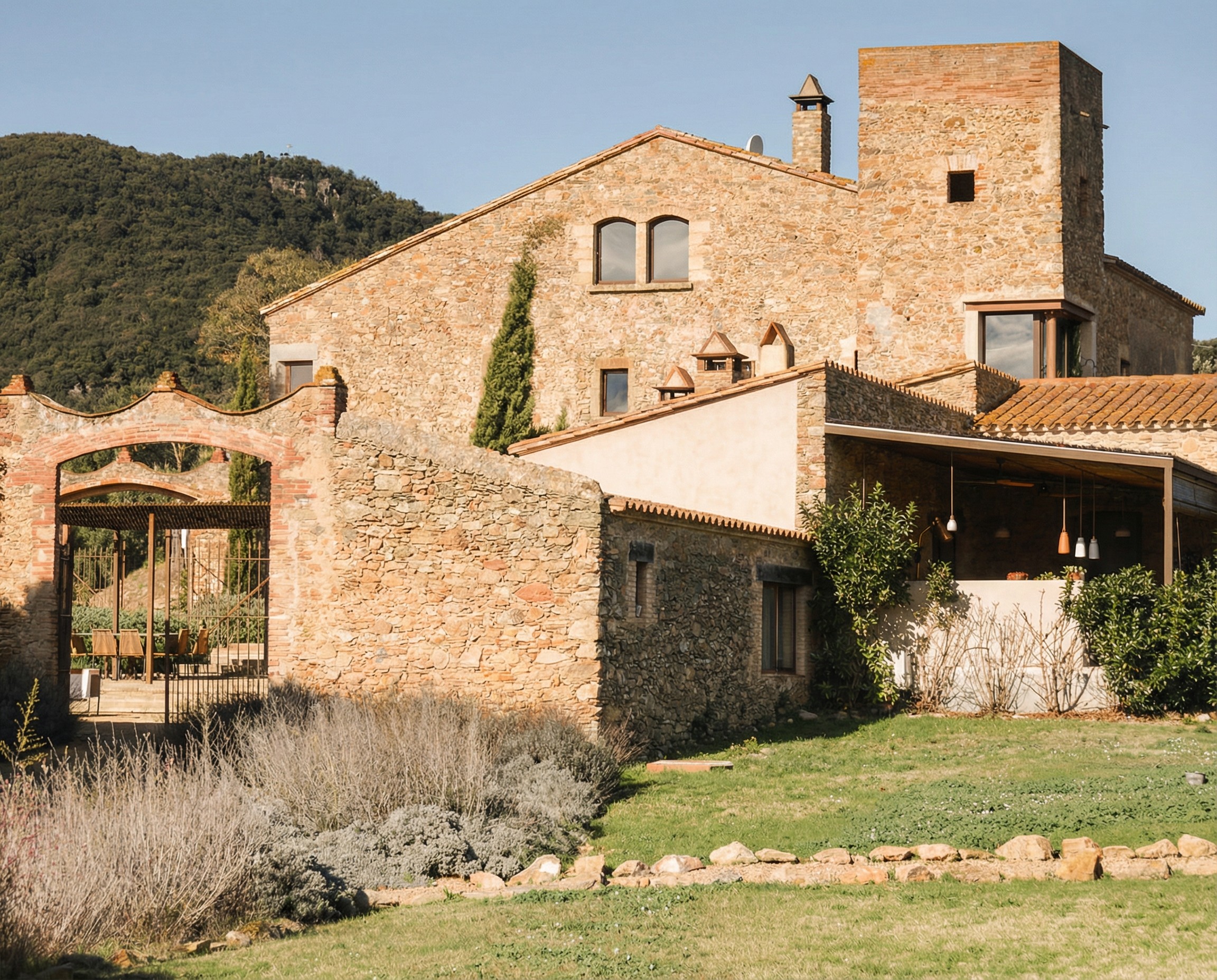
Off Grid is the newest of our Catalan features. Gerard Greene co-founded YOTEL and spent a career building it out across cities, before moving to the hills below Mare de Déu del Mont and dedicating a year restoring a seventeenth-century masía with the Girona designer Ariadna Puigdomenech. Ten bedrooms in the house, four more in the barn. Limewash, terracotta, reclaimed wood, hand-cut La Bisbal tiles, upcycled furniture across Catalonia. Dinner is often communal, everyone seated around the dining room's long table. There is even a bike workshop, which tells you who many of the guests are.

Can Buch sits at the head of the same Llémena valley, at Sant Aniol de Finestres, and it is the most literal farm of the five. The farmhouse dates to 1621. It was rebuilt by former football coach Gerard Bofill with the help of local artisans and, wherever possible, materials off the site itself: their hammam for example is made from the building's own stone and ceramic. The pool is filtered by plants rather than chlorine. The restaurant is plant-based and much of it comes from the garden thirty metres away. The whole place runs on renewable energy generated on site, which is a sentence a great many properties write and very few earn.
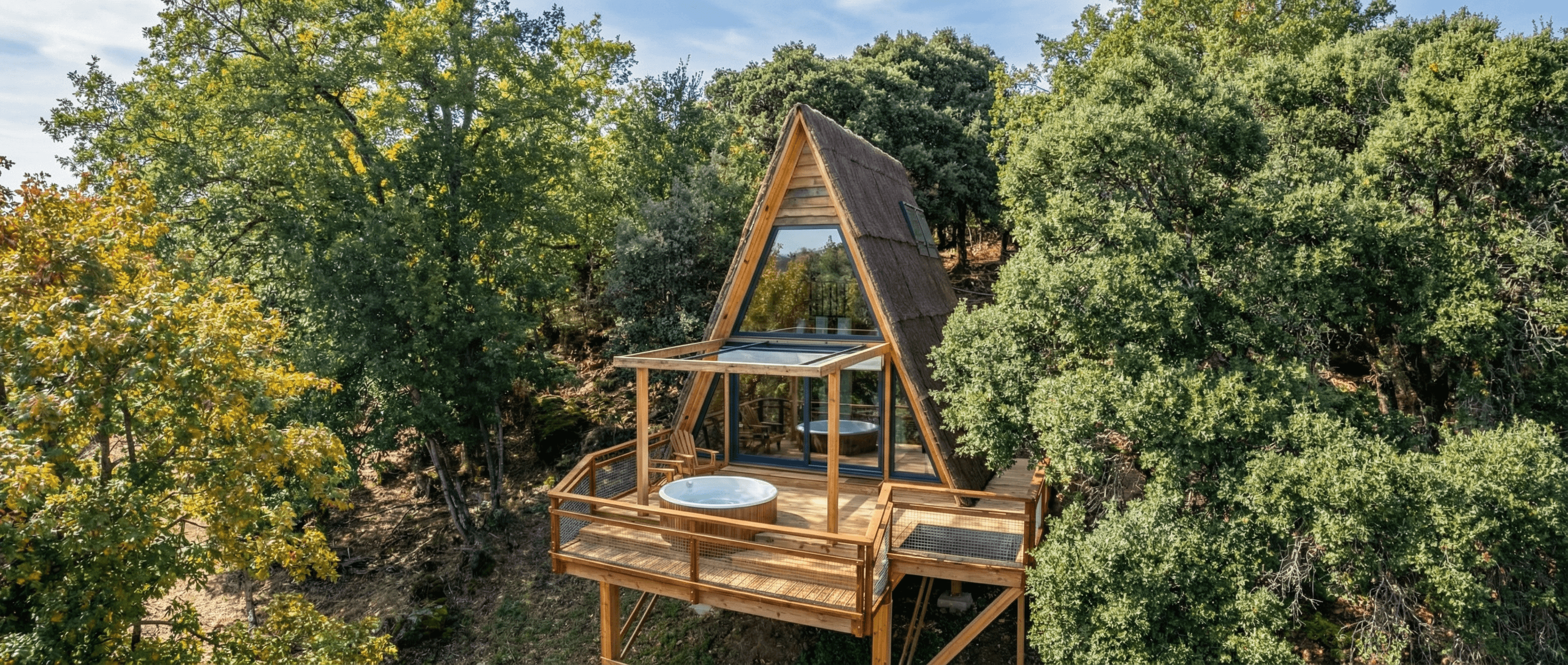
Cabanyes entre Valls is exactly what its name says: cabins between valleys. It sits on the Mas Espunya estate in the Vall de Bianya, timber cabins and treehouses with hot tubs on the decks, breakfast brought to the door, and no neighbours. Owner Álex López started pursuing his dream after battling cancer, and Carlos and Alfonso helped him to finally build it on their land. Cabanyes entre Valls is the place we recommend when someone tells us they are tired of ordinary holidays, or they just want to honor a special moment with a special place.
The —— season
Come in September or October. The harvest is in across the Empordà, the first rains bring the mushrooms and the menus change within a week, and when the tramuntana blows through it leaves the sky scrubbed clean for days afterwards. Spring is the green alternative, wetter, the beech coming into leaf in the Garrotxa around the middle of April.
August is the odd one. The coast is full and the countryside, forty minutes inland, is close to empty. There is a case for it, but it is not the month we would choose.
Book the Garrotxa houses early for autumn. There are not many rooms up there, and the cyclists know.
A note from Solwyn
We live in Barcelona, so this is home ground, and we hold it to a higher standard because of that. Every place above we have visited in person, eaten at, and argued about on the drive home. These arguments are our real quality control.