Ripe Now
What ripens in the Mediterranean in September
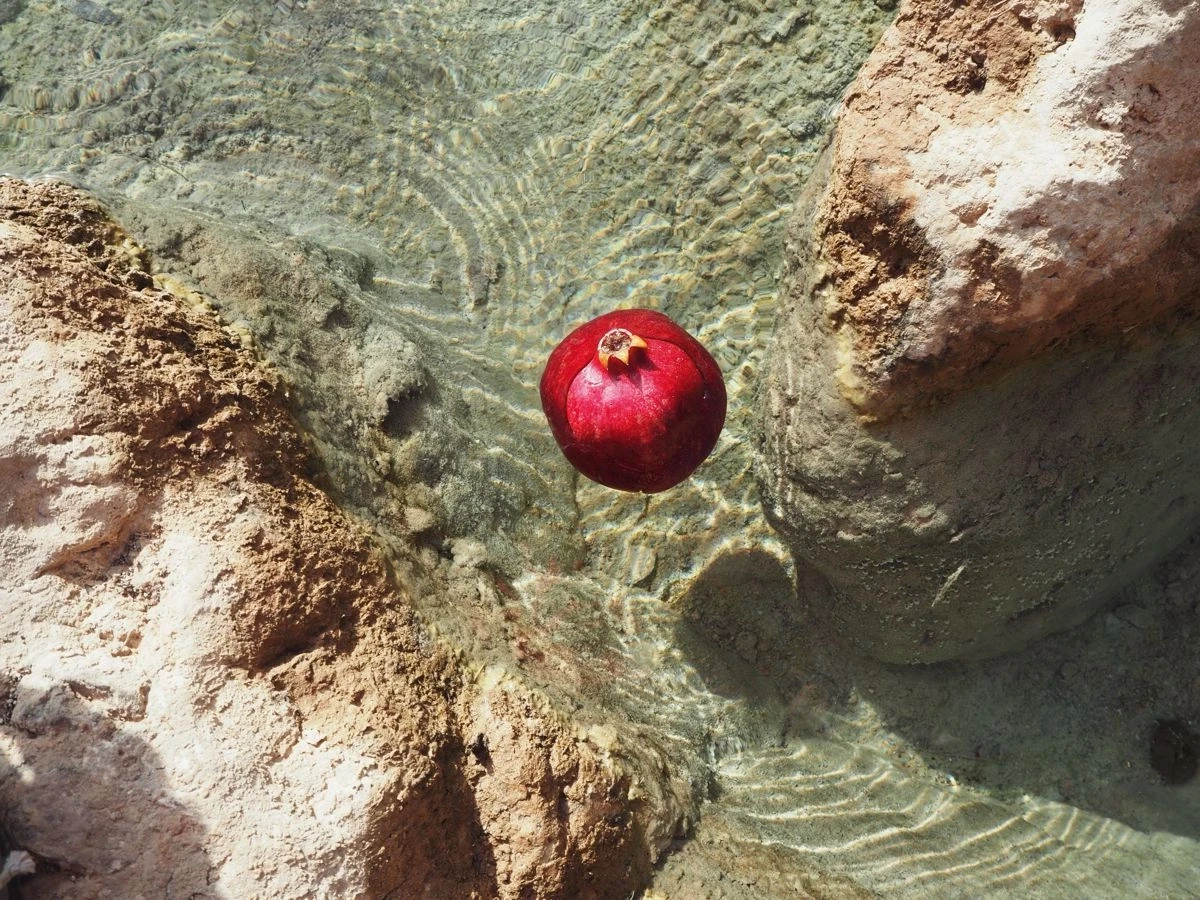
September is the busiest month of the Mediterranean farming year and the emptiest month on its coasts. Six harvests, from the Douro to Crete, and where to be standing when each one happens.
August ends the way a festa does: suddenly, and with everyone slightly relieved.
The beaches empty over a single weekend. Car hire prices halve. What is left is the part of the Mediterranean year we like best, when the countryside stops performing for visitors and goes back to work.
September is not the end of the season. It is the start of the hardest six weeks of the agricultural year, and it happens across the whole basin at once: grapes in Portugal and Tuscany, rice in three river deltas, almonds coming off trees in Mallorca and Puglia, prickly pears on Etna, pomegranates in Alicante, and then, after the first serious rain, mushrooms. Almost none of it is arranged for you to watch. All of it is happening within a short drive of somewhere you could be staying.
There are figs, too. The second crop holds for two or three weeks and does not travel, which is why supermarket figs taste of nothing, and the correct way to eat one is standing under the tree before anyone thinks to weigh it. But figs are a matter of luck and timing.. the six below can fit a calendar better.
Here is roughly how the month runs:
The —— vines
The grape harvest opens the month and gives it its vocabulary: vindima in Portugal, vendimia in Spain, vendemmia in Italy, verema in Catalonia.
In the Douro it starts in the second half of September and it is still, in places, done by hand because a tractor cannot stand on a forty-degree schist terrace. Teams called rogas work the slopes above the river, and in the lodges that still make port the old way, the grapes go into granite lagares and are trodden by foot in shifts, to music, for hours. It is less picturesque than it sounds and much louder.
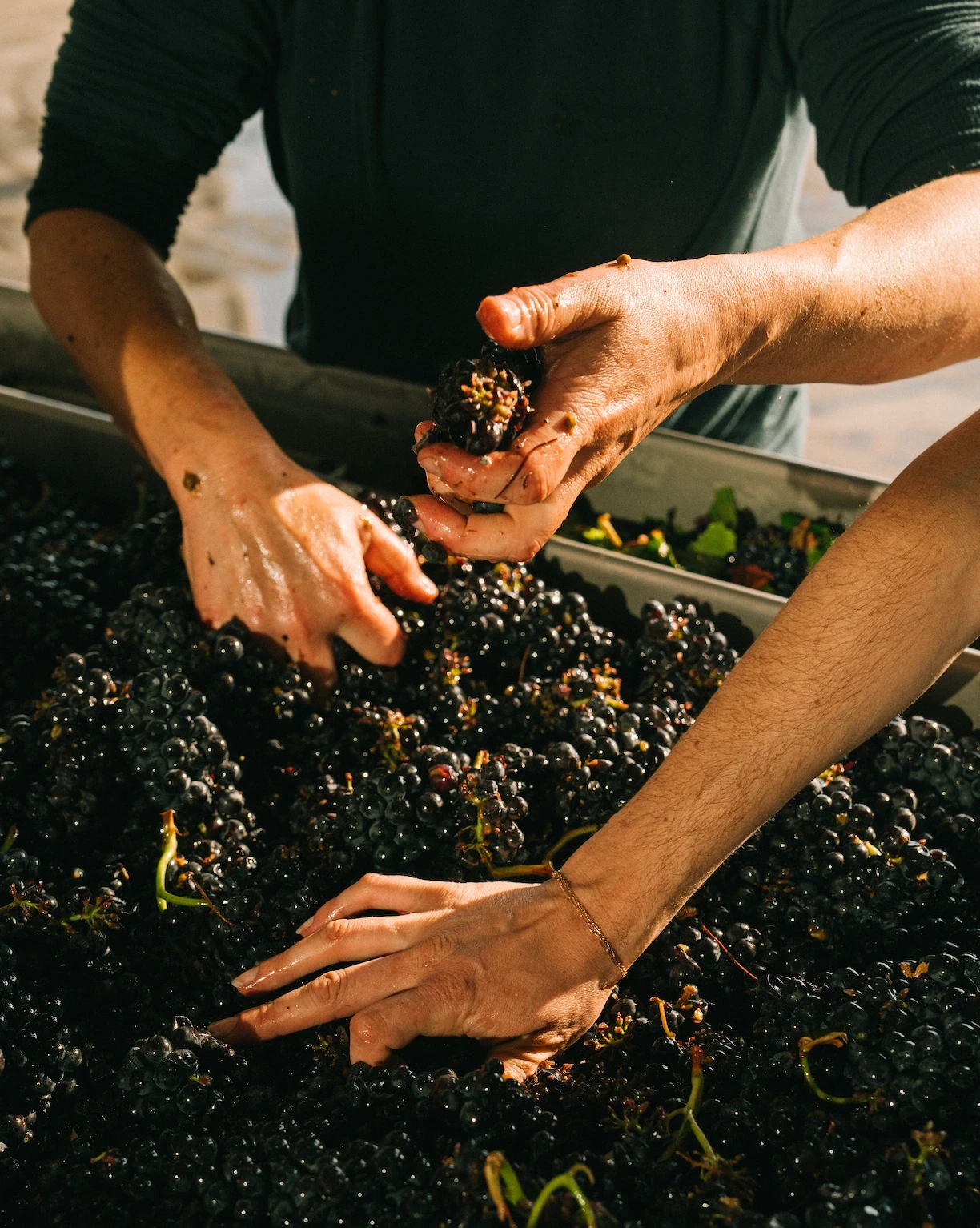
Rioja runs later. The Tempranillo comes in from the last week of September through October, and Rioja Alta, higher and cooler, finishes last of all. Tuscany sits in between: the white grapes go early, the Sangiovese waits, sometimes into the middle of October if the grower has the nerve for it.
What all three share, this month, is the traffic. Drive any road in wine country in September and you will get stuck behind a trailer of fruit doing eleven kilometres an hour. This is usually their whole point.
The —— almond
Almonds come down at the beginning of the month, and how they come down tells you which part of the Mediterranean you are in.
In Mallorca it is still largely done by hand: nets spread under the branches, long canes, and someone beating the tree while someone else moves the net. The trees are dry-farmed, unirrigated, planted on terraces that predate the road, and a great many of them are unfortunately dying.
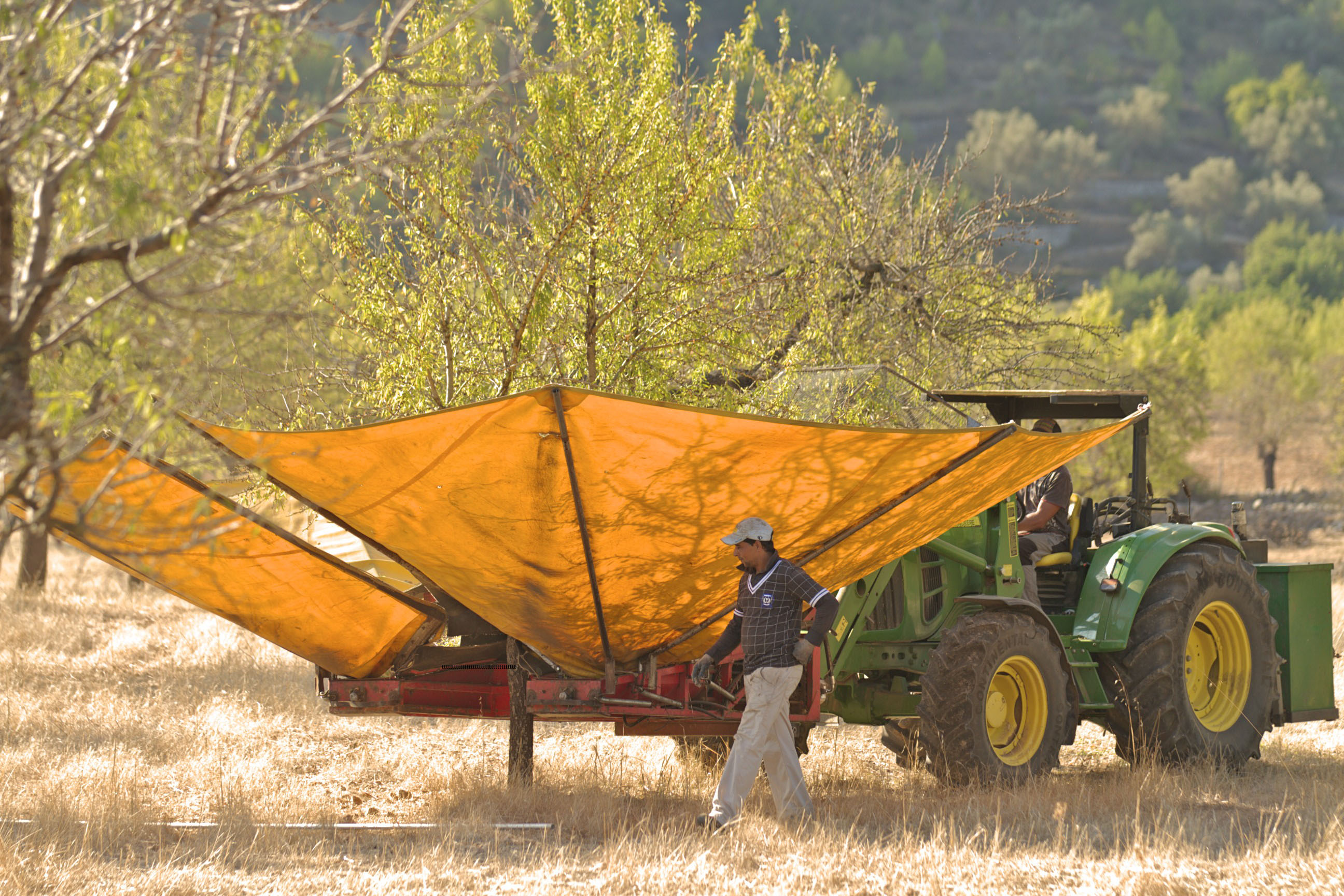
The Alentejo is the opposite argument. Almonds barely existed there fifteen years ago. Then the Alqueva reservoir put water on the plain and the area under almond in the irrigated perimeter went from under a thousand hectares in 2015 to more than twenty-three thousand by 2024. The varieties are Belona, Soleta and Vairo, late-flowering and self-fertile, planted in dense rows and harvested by a machine that grips the trunk and shakes. It is efficient, it is not romantic, and it is the reason almonds are affordable.
Puglia keeps the older version alive on purpose. Around Toritto, on the edge of the Alta Murgia, three local cultivars survived the arrival of the Californian varieties, and one of them, the Filippo Cea, still has its mother tree standing in a field outside the town. It is a Slow Food presidium. The harvest runs from late August into early October, still by bacchiatura, still onto nets.
The —— rice
Three river deltas cut their rice within a few weeks of each other, and all three are flat, wet, mosquito-ridden but worth the detour.
The Ebre Delta goes first, from early September. Combines work across a plain so level that the horizon is interrupted only by the odd farmhouse, and the varieties are Bomba, which absorbs stock without collapsing, and Montsià. Then the interesting part: once the crop is off, the fields are flooded again and the delta turns into one of the most important bird sites in the western Mediterranean. Flamingos in a rice field, in October, with the Ports mountains behind them.
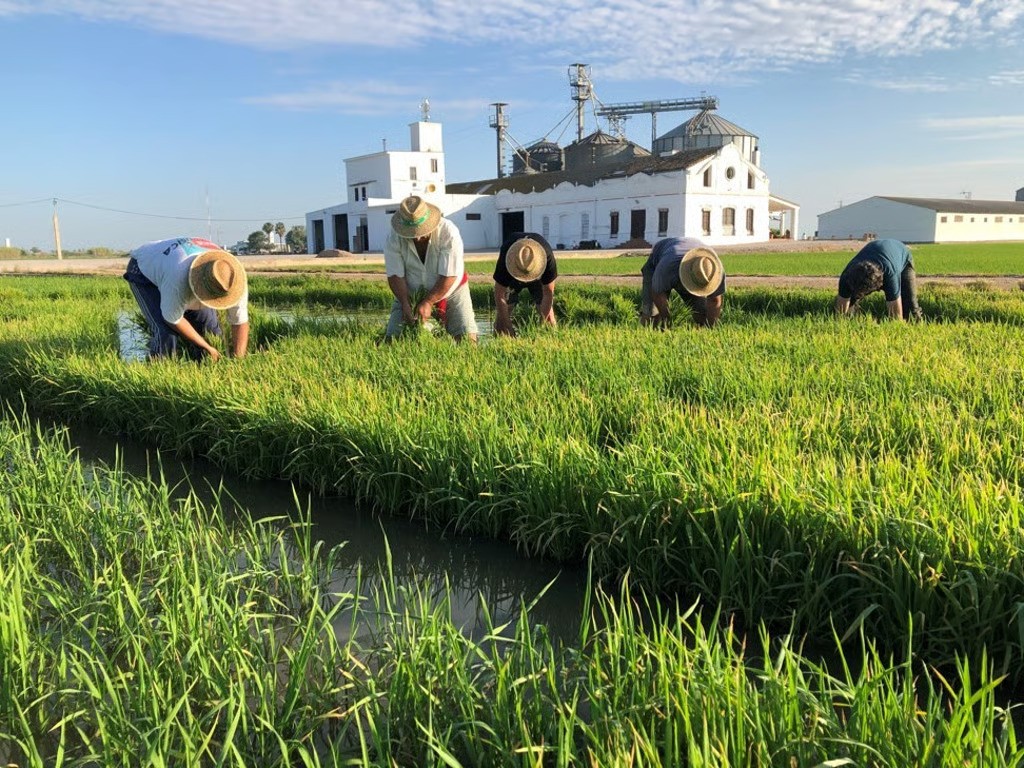
The Albufera, south of Valencia, does the same thing and has a word for it. After the harvest around Sueca and El Palmar, the sluices close and the fields fill for the winter: the perellonà. It is the water you see in every photograph of the Albufera at sunset, and it is agricultural infrastructure, not scenery.
The Camargue cuts through September and October, about thirty days of work, on land that was salt marsh until rice was planted to wash the salt out of it. The IGP (Protected Geographical Indication) of the rice dates from 2000, the red rice is the signature one of the region. Arles holds the Fête des Prémices du Riz in September, parading giant floats on the street. Nobody has ever been able to explain the floats to us.
The —— pear
Prickly pears are September's argument for gloves. Sicily is where the crop is taken most seriously. On the flanks of Etna, between roughly 150 and 750 metres, the Ficodindia dell'Etna has held a DOP since 2003, and the growers use a technique called scozzolatura: in late May they knock off the entire first flowering, which forces a second one, which produces fruit that is larger, sweeter and arrives from September onwards. These are the bastardoni. There are three of them worth knowing by name, the yellow sulfarina, the red sanguigna and the white muscaredda, and San Cono has thrown a festival for them in the first weekend of October since 1984.
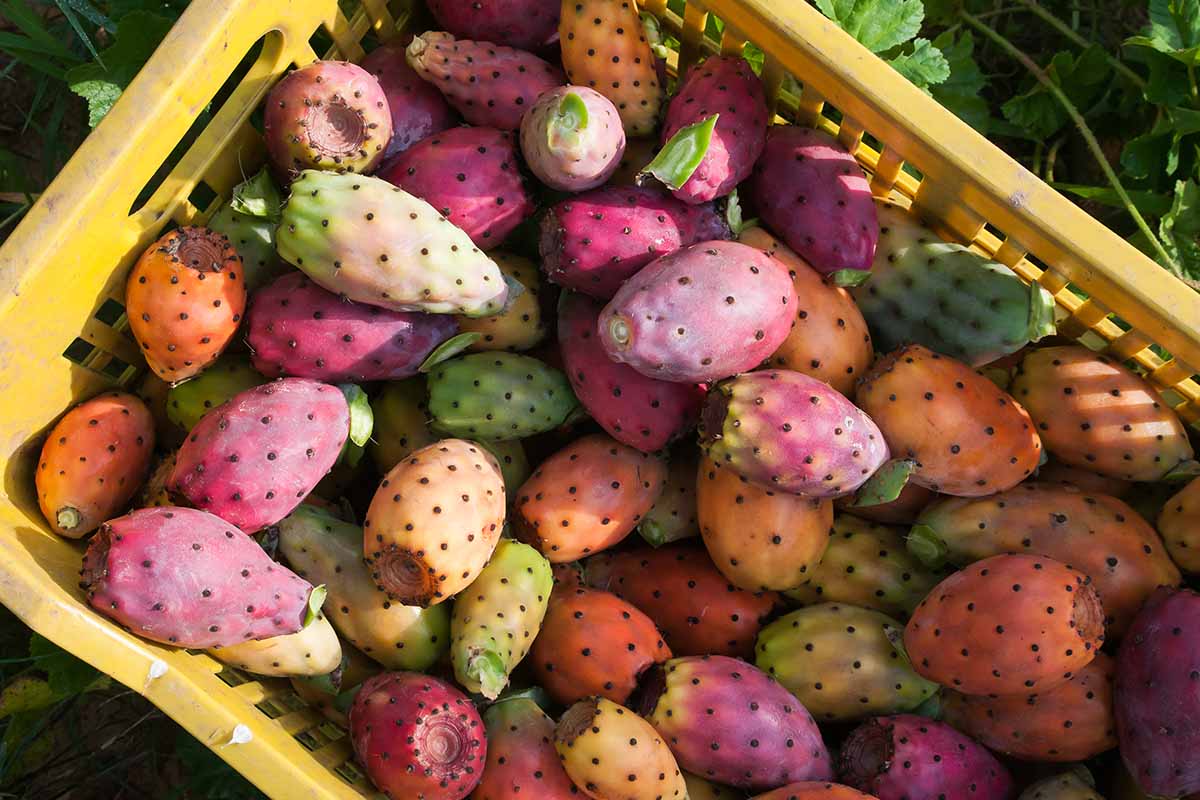
In Andalusia the same plant grows on field boundaries and nobody planted it. Higos chumbos are eaten cold, sold from the back of a van. Lately, they have become noticeable again.
Crete calls them frangosyka, Frankish figs, and grows them along terrace walls where they double as fencing. Picking one without regret requires gloves, a certain technique, and ideally someone local standing behind you saying "no, not like that..".
The —— pomegranate
The first pomegranates crack open on the branch at the end of the month, which is how they announce themselves.
Elche is the centre of it. The Campo de Elche grows about three thousand hectares of the Mollar variety, roughly fifty thousand tonnes a year, under a DOP registered in 2016, and the season opens with a formal first cut in the field in late September. The Mollar's seeds are soft enough to swallow, which is the entire reason it survived while harder varieties went to juice.
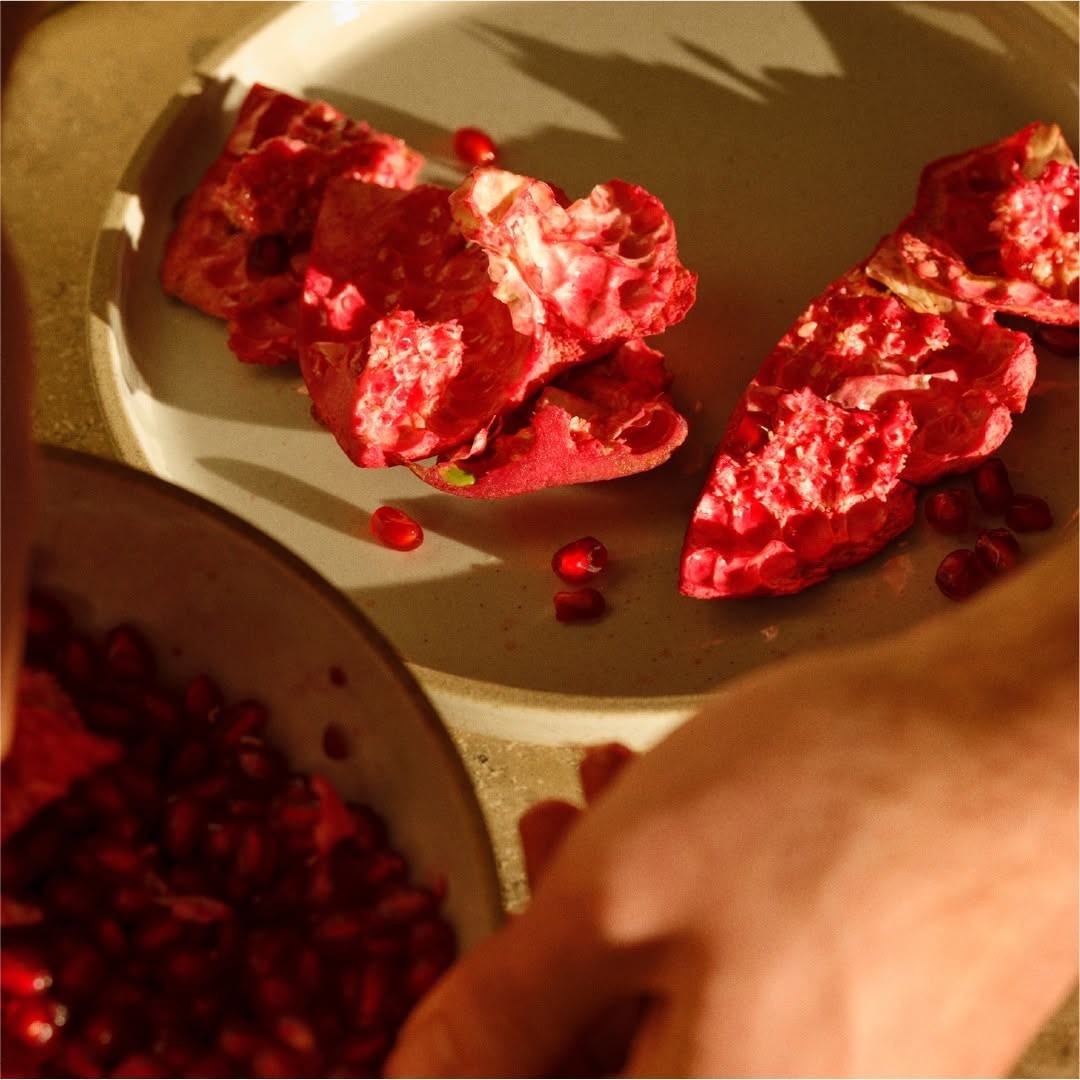
In the Peloponnese the harvest runs from late September into November, and the fruit carries a role it does not carry in Spain: pomegranates are hung by the door, broken on the threshold at New Year, and folded into the wheat dishes made for the dead. A fruit doing three jobs at once.
Puglia is the newcomer. Pomegranate went in on land that had been olive or table grape, largely for export, and the trees are young enough that the orchards still look temporary.
The —— rain
Somewhere around the middle of the month the first proper rain arrives. It lasts a day or two. Within a week the hills go from straw to green, the air softens, and underground everything changes.
In Catalonia the response is immediate and slightly deranged. The boletaires go out at dawn for rovellons, and they will tell you the woods they went to but will lie about which slope, so they can keep it all to themselves. Tuscany waits for porcini in the chestnut and oak woods, and the price on the roadside boards falls by half within four days of a good rain. In Epirus, the beech forest of the Pindus above the Zagori villages produces porcini, chanterelles and truffles, and Grevena, an hour north, calls itself the mushroom capital of Greece and has the festival to prove it.

Two rules, both at risk to be learned the hard way. Go with someone who knows the ground, because northern Greece and northern Spain both have lethal species growing beside the good ones. And go in the week after the rain, not the day after.
The sea, meanwhile, is at its warmest of the entire year. August visitors are rarely told this. The best swimming in the Mediterranean happens after everyone has gone home.
A note from Solwyn
September is when we do most of our own travelling. Hosts have time again, dinners run longer, and the conversations that were impossible in August happen easily on a terrace at nine in the evening. We plan our visits around what is being cut or picked, partly for the journal and partly because arriving during a harvest means leaving with jars. Nobody has ever let us leave empty-handed. We have stopped resisting.