Tuscany has a coast: A ten-stop road trip from Florence to Bolgheri

Florence, Viareggio, Volterra, San Gimignano, Siena, Val d'Orcia, Piombino. A road trip with ten stops, four of which are on the sea. That ratio is roughly true to Tuscany, but almost never true to a Tuscan itinerary. I wanted to see why.
Tuscany is not one landscape. It is four or five, stacked close enough that you can drive through all of them before lunch.
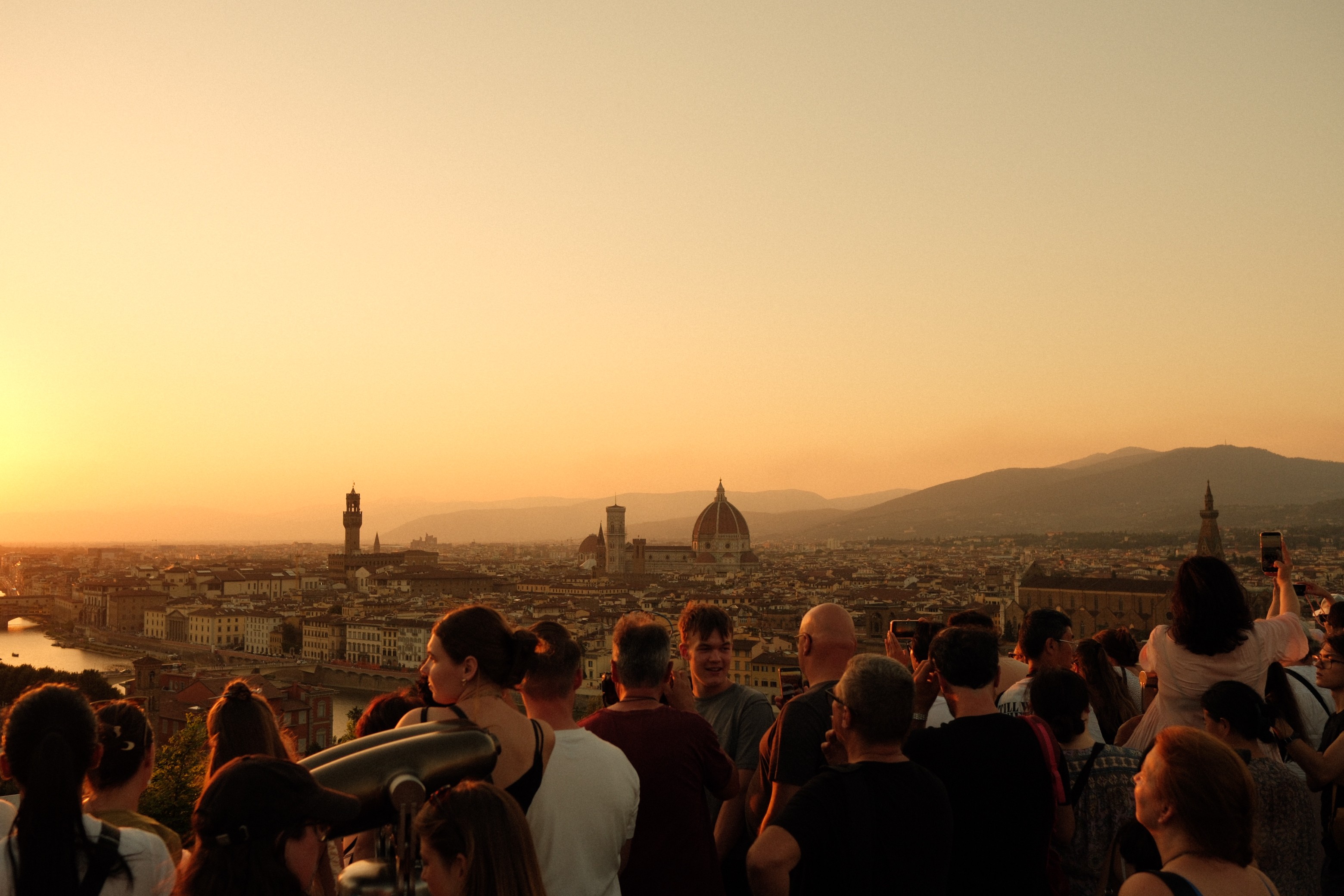
Florence, Pisa, and the cost of being beautiful
Florence is the most beautiful large city in Italy, I will argue that with anyone. I would also not go back there in July.
By ten in the morning the heat sits in the streets between the buildings and does not move, and the crowd going into the Uffizi has the density and the temper of a transport strike. The city has been loved past the point where loving it is comfortable. None of that is Florence's fault, but it becomes the visitor's problem (ours included) and the honest response is to start early, drink your coffee standing up, and get out on the FI-PI-LI highway before the day thickens.
Pisa is the same condition in miniature. The Piazza dei Miracoli does what it does. Everyone stands in the same place, arms out, holding up the same tower, and the whole square is organised around a single photograph that several million people have already taken. A marvellous place nonetheless, but it makes you feel more special when you don’t pose for that photo than when you do.
So we went the other way, to the south wall of the church of Sant'Antonio Abate, five minutes from the station, where Keith Haring painted Tuttomondo in 1989. Thirty figures, interlocking, flat colour, on the end of an ordinary building on an ordinary street. It was among the last public works he made. He died the following February.
Two things in one town, two kilometres apart on foot. Only one of them had a queue.
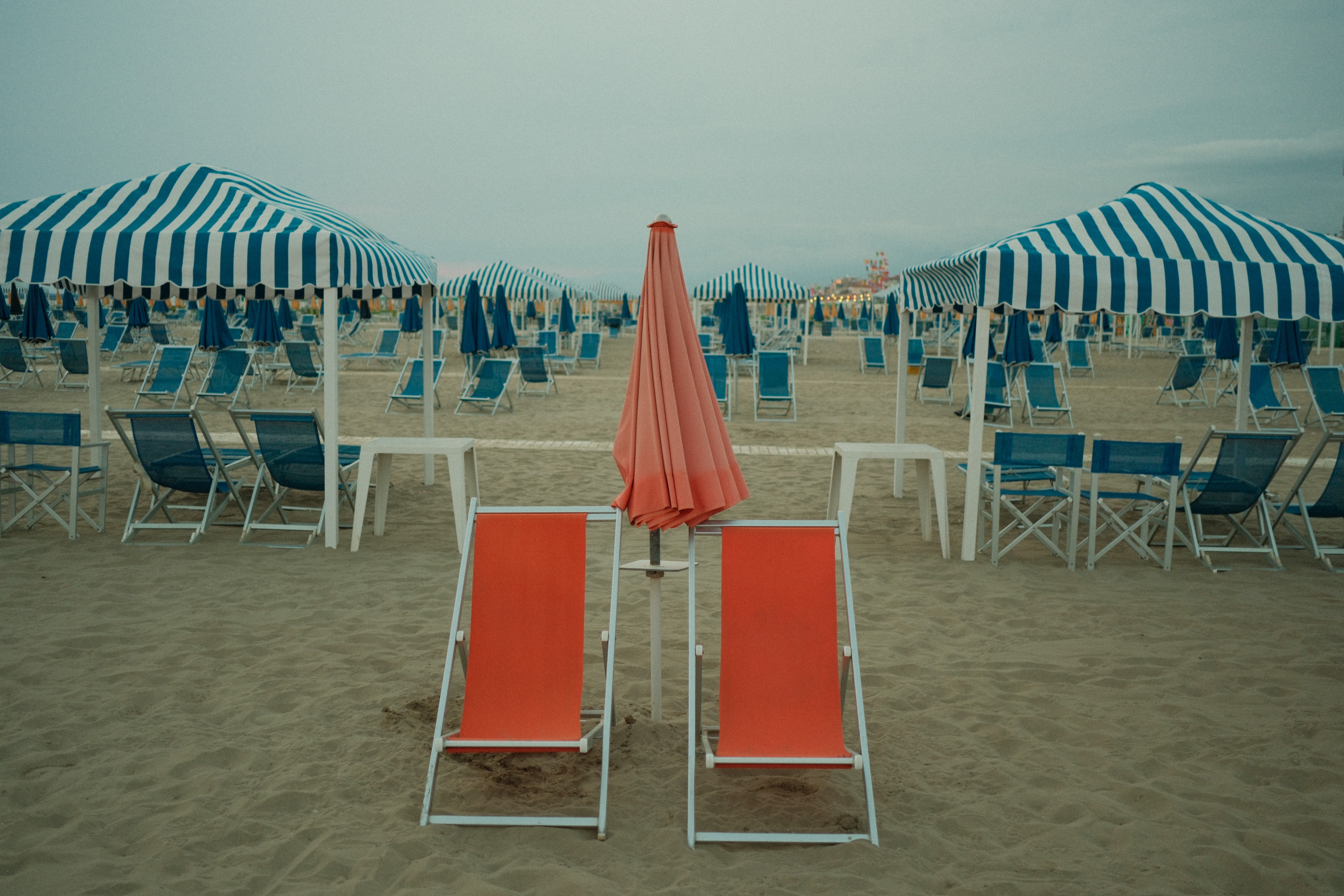
Viareggio, which is two towns at once
Half an hour up the coast was our first real argument for coming to the sea at all.
The Viareggio seafront used to be built entirely of wood. Cafés, shops, bathing huts, the lot. In October 1917 it caught fire and most of it went in a matter of hours. What replaced it through the 1920s was masonry, and the job went to the architect Alfredo Belluomini and the ceramicist Galileo Chini, who had spent time in Bangkok decorating the Ananta Samakhom Throne Hall and came home with the shapes still in his eye.
Which is why the Gran Caffè Margherita, rebuilt in 1928, carries two onion domes scaled in yellow, blue and white majolica, sitting on a Tuscan beach as though it had drifted in from a different continent. Along the same stretch: the Bagno Balena entrance, the Galleria del Libro, and other art déco beauties where artists like Puccini used to live and work a century ago.
Then you turn ninety degrees and look at the beach.
It is long, flat, and divided end to end into concessions. Rows of sunbeds in matched colours, umbrellas in grids, a bar every hundred metres or so, each with its own name and its own shade of parasol, running for kilometres. Nothing about it is unpleasant. It is well run and it has been well run for a century. But the elegance is on the landward side of the road and the commerce is on the seaward side, and you can feel the two looking straight at each other.
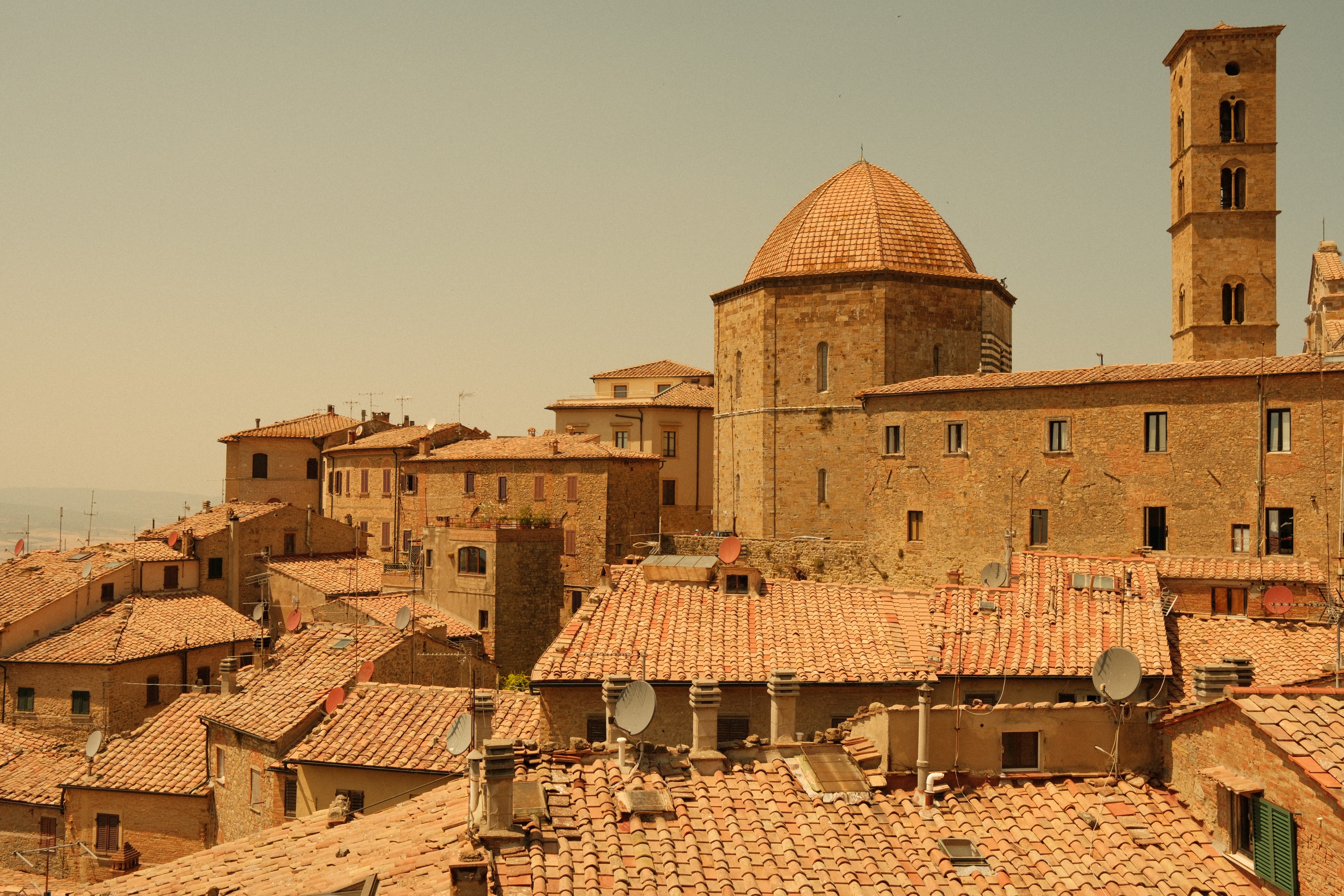
Volterra, and the first real climb
Inland again, Volterra sits above five hundred metres with the ground falling away on most sides, and the approach is half the point.
The town is preserved to a degree that feels almost implausible. The Etruscans called it Velathri and it was one of the twelve cities of their league, rich on copper, silver, salt and the alabaster still coming out of the slopes. You enter through the Porta all'Arco, dating to the fourth century BC and carrying three heads eroded past identification. Gods, probably, or maybe lions.
In 1944 the retreating German army intended to blow the gate to block the road. The people of the town took up the paving stones of the street and walled the arch shut themselves, overnight, by hand. Uphill from it are the alabaster workshops, of which there were eight or nine in 1786 and sixty by 1830, and the surviving ones are still full of white dust that settles on everything including the man doing the cutting.
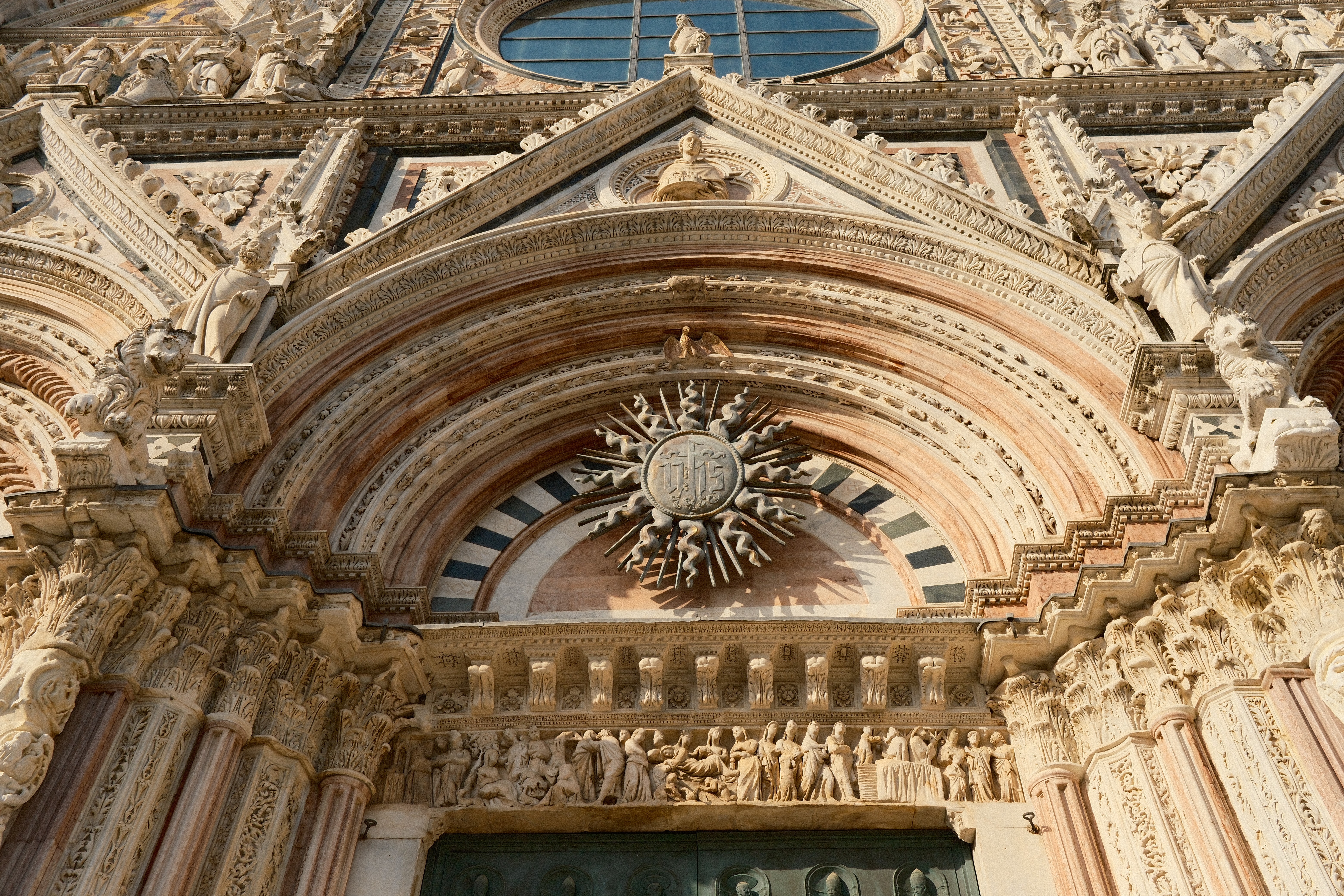
San Gimignano, then Siena
Doing both in one day sounds too much but I would do it again.
San Gimignano had seventy-two towers once. Fourteen are left. They were never really defensive, they were a scoreboard: rival families grown rich on the pilgrim traffic of the Via Francigena and on saffron, each building higher than the neighbour until in 1255 the commune legislated a ceiling. When Florence took the town in 1555, around fifty towers came down and new building was banned, which is the accidental reason the skyline contains no Renaissance and no Baroque at all. The town was punished into becoming a preservation.
Siena feels like a much bigger city than it actually is. It sits across three ridges, so you are constantly looking at the rest of it from somewhere else: a street ends, and there is Siena, arranged on the opposite hill like a separate town. That is what makes it seem far larger than it is. The streets are steep enough that walking them is an event in itself.
The Duomo I was very surprisingly impressed by. Banded black and white marble inside and out, an inlaid floor of a kind that exists nowhere else, and next to it the Facciatone, the wall of the nave they were building when the plague arrived in 1348 and never finished.
I will leave here a short and honest recommendation to stop by Coffee at Torrefazione Fiorella, on Via di Città just off the Campo, which has been roasting its own since 1985 and is run by a young and cheerful crew. Ask for their home brew and drink it standing - that is the correct way to have it anyway.
Val d'Orcia, where the pace changes
South of Siena the roads empty and the tempo slows down.
In Montalcino, the rules of winemaking are written into law. Brunello cannot be sold until the fifth year after the harvest, and at least two of those years have to pass in wood. Riserva waits another year. The same vineyards, same hands, same Sangiovese, released after twelve months instead, is Rosso di Montalcino.
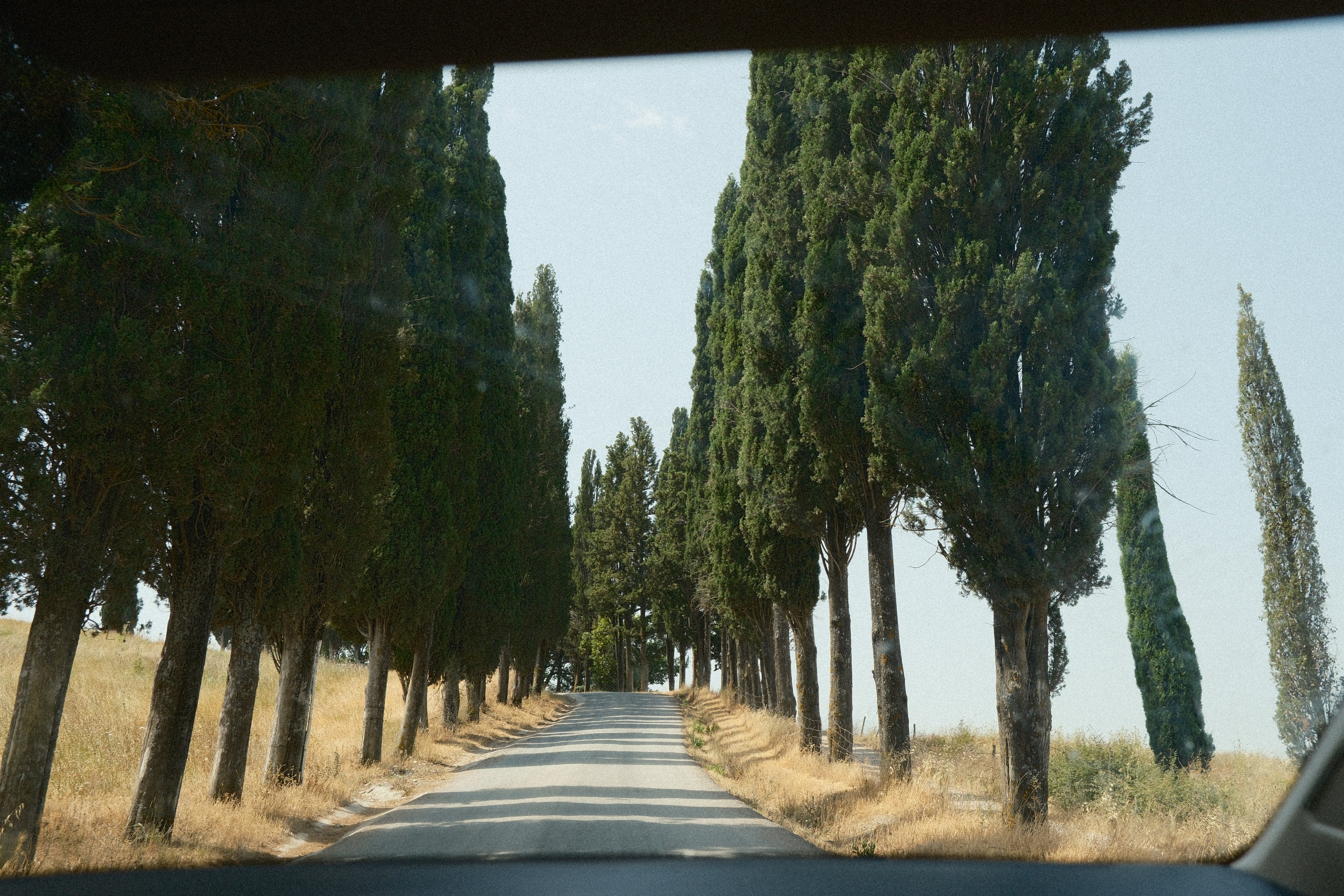
By July the valley has changed colour. The spring version, the one on every calendar, is uniform green. What we drove through was the other one: wheat cut or going over, the hills gone to a dry pale gold closer to savannah than to postcard, and the cypresses black-green against it. The trees are the only thing in the landscape that does not change with the season, which is presumably why every photograph of the region has them in it.
Agriturismos are everywhere now, one every few kilometres, and a great many of them are producing something as well as hosting: cheese, oil, wine, saffron, honey. Pienza is fifteen minutes from San Quirico and its pecorino has been the local argument for cheese for centuries. The white truffles the area is known for are an autumn matter, worth knowing before anyone books a trip around them.
Meat is a year-round proposition. Bistecca alla fiorentina is the one everybody names, a T-bone cut thick, seared, served rare and sold by weight, traditionally from Chianina cattle. Costata is the rib. Tagliata is the same beef sliced after cooking and dressed, which is what you should order when you are two people and not four.
San Quirico d'Orcia takes less than an hour to walk. Through Porta Nuova and the Horti Leonini open on the right: a formal garden cut to the shape geometrically, laid out around 1581 by Diomede Leoni on land the Medici gave him.
Out in the fields between here and Pienza stands the Cappella della Madonna di Vitaleta, a chapel roughly the size of a garage, alone on a rise with a short avenue of cypresses in front of it. It has no town around it and never did, yet it has become one of the most recognizable sights around the area.

Piombino, Bolgheri, and the last of the coast
From the Val d'Orcia the sensible move is to continue south. We turned west instead, back to the water.
Piombino often gets skipped. It is the ferry port for Elba, forty minutes to Portoferraio, and most people who arrive are reading the timetable rather than the town. What they miss is Piazza Bovio, a terrace laid out in the 1920s on the end of a cliff at the tip of the promontory, sea on three sides and Elba filling the middle distance close enough to pick out the shape of the hills.
The beaches worth having are not the ones with the car parks. Several of the coves along the promontory are reachable only on foot, twenty or thirty minutes through pine and scrub with no sign that anything is coming, and then rock, and then water noticeably clearer than anything you will swim in nearer a road. Buca delle Fate, below Populonia, is the one we went for.
Unexpected enough, the eating in Piombino was one of the best on our route. Octopus stewed slowly until it gives up, clams, whatever came in that morning, cooked plainly and priced for what they are and not for just some fancy sea views.
On the night of the World Cup final, Piombino had one bar with a screen pushed to the street. Forty or fifty people gathered around in the street to watch it, like one big family torn by which team to support. Most bars in Italy cannot simply carry a television outside, so the ones that manage it typically win over the whole town.