The grape harvest, from the Empordà to the Alfina plateau
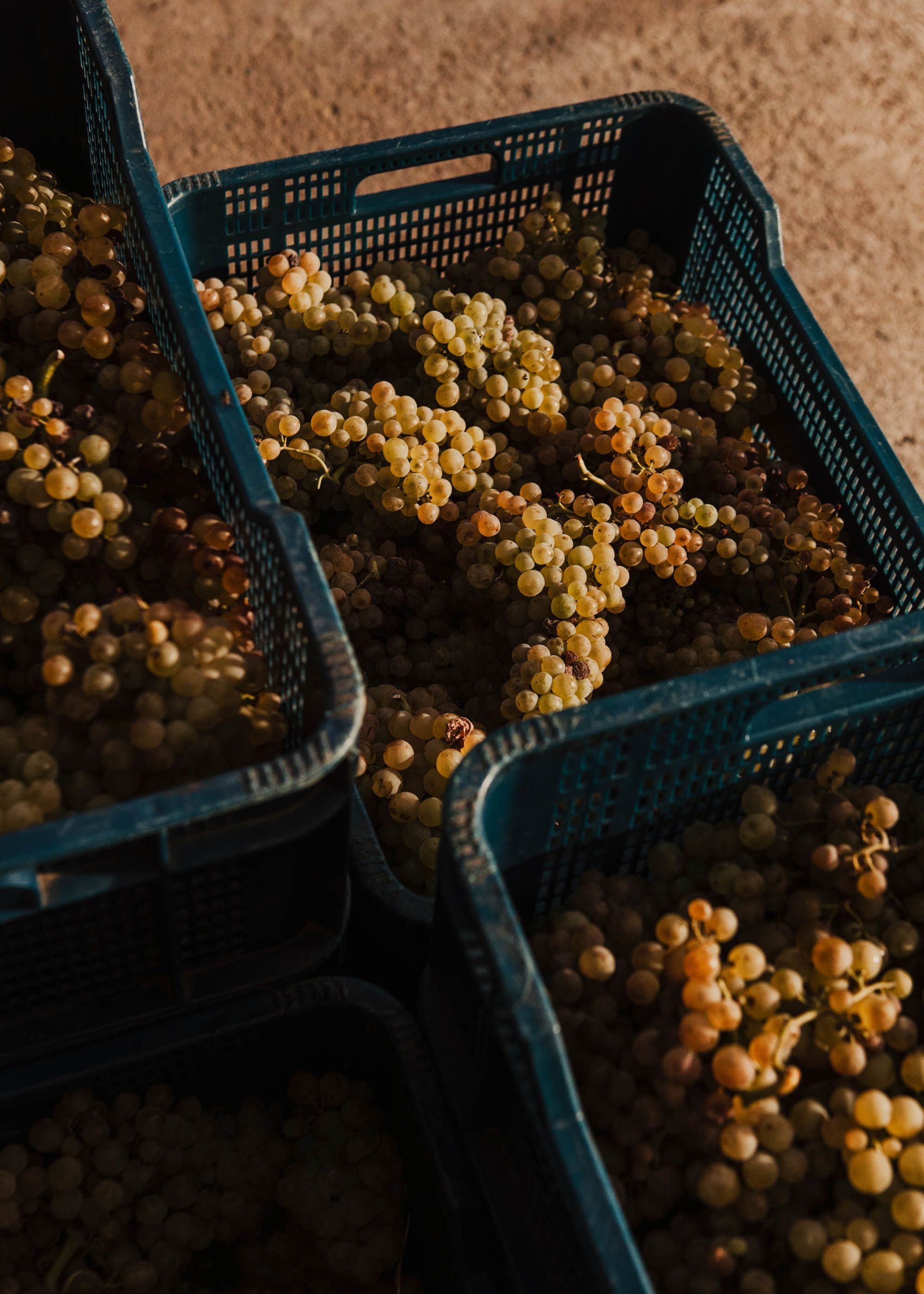
For a few weeks each September the two ends of our collection do the same thing. Grapes come off the vines in north-east Catalonia and on a volcanic plateau above Orvieto, and everything else waits.
If you want to understand a wine region, September is the month to stand in it.
Nine hundred kilometres apart, in the far north-east of Catalonia and on a tableland where Umbria, Lazio and Tuscany meet, the same three weeks are happening. Crates. Tractors on the wrong side of the road. Somebody watching a forecast with more attention than is healthy.
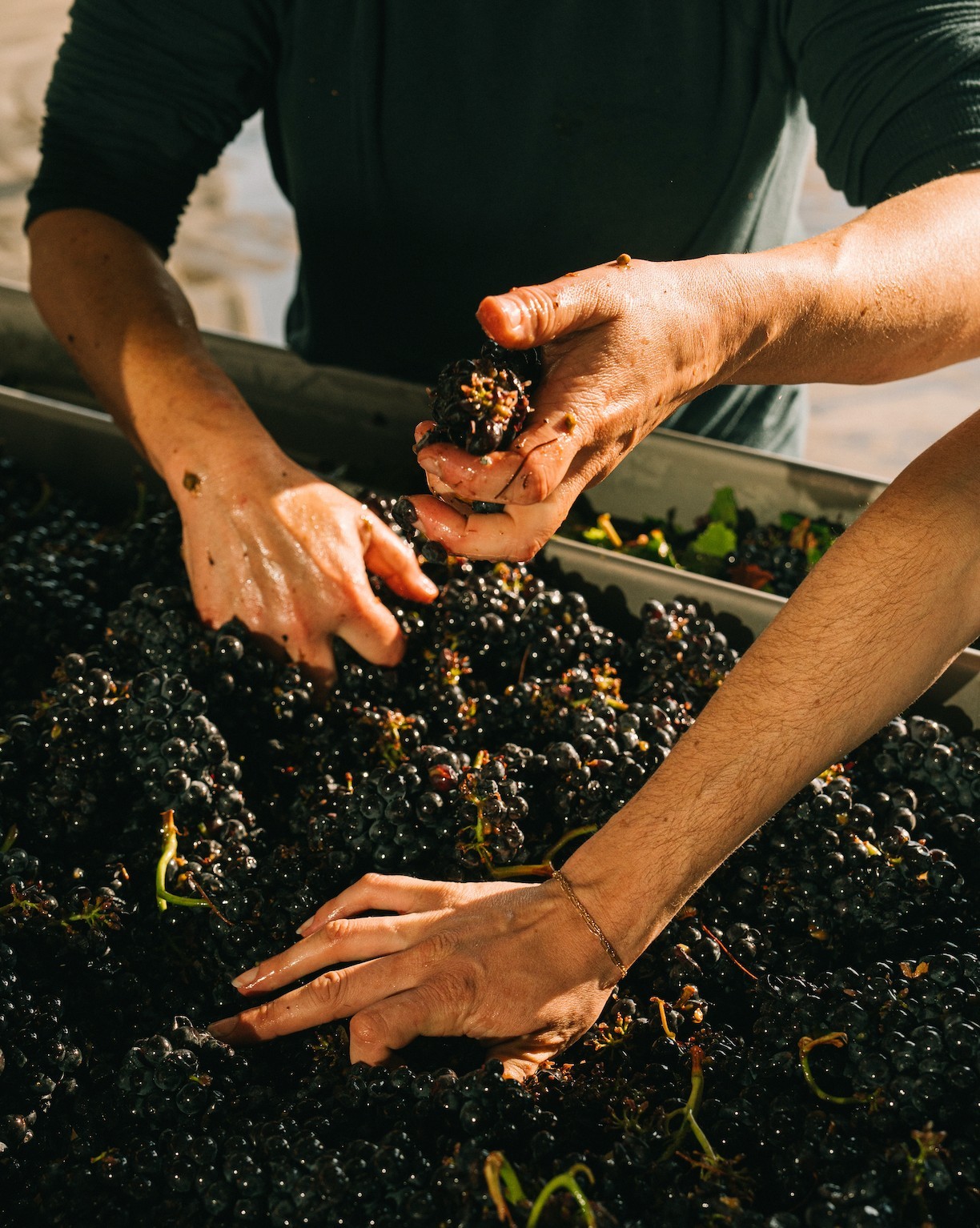
The two places could not be less alike in what they produce. One is an old, wind-battered DO (Denominación de Origen) of small family cellars a few kilometres from the French border. The other is a farm of three hectares, run by two people who did not grow up in wine, making bottles that would have been unsellable thirty years ago and are now on lists in Copenhagen.
What they share is the calendar and the fact that in September neither of them is really open to visitors in the way visitors expect. That is the reason to go.
Here is what is happening at each end, and how to be there without getting in the way.
The — verema
In the Empordà the harvest opens in the second half of August with the whites and runs into October. This is old ground. The DO dates only from 1972, but the Greeks had been the first ones to land at Empúries and the Romans also planted after them. The varieties that still matter are garnatxa and carinyena, which everyone here calls samsó.
The thing that shapes the wine is the wind. The tramuntana comes down off the Pyrenees and blows across the plain for days at a stretch, and it does three things: it dries the fruit and keeps rot out, it cuts the yield, and it obliges nearly every vine in the region to be staked, because an untrained vine on this plain will not stay standing. Growers mention the lost yield the way other people mention an old injury - it concentrates what is left.
The picking splits by ground. Out on the flat around Capmany and Garriguella much of it is mechanised, at night, because the fruit comes in cooler. Up in the older parcels on the Albera foothills, towards Espolla and Rabós, where the rows follow the slope, it is still hands and crates and someone driving the tractor very slowly. An hour further north the same two grapes become the produce of Banyuls, where the labels are in French.
The vines here sit low, mostly under two hundred metres, and the sea is twenty minutes away. Pick a morning in the third week of September and you can be in a vineyard at seven and then swimming in the sea by two.
The — vendemmia
Malauva Casa Agricola sits at the other end of the collection and the other end of the argument.
The Alfina plateau is a wide volcanic tableland at around five hundred and fifty metres, above Orvieto and a few kilometres from Lago di Bolsena, on the seam where three regions meet. The soil is tuff. The nights stay cold through September even when the days do not, so the fruit ripens slowly and holds its acid, which is why the whites from up here taste sharper than the latitude suggests they should.
Elisa Cortese and Giovanni Adua left Rome and Turin in the summer of 2011, bought a camper in poor condition, and spent six years WWOOFing their way around Italian farms before deciding what to do. In 2017 they bought an old stone house at Castel Giorgio with six hectares of vines, olives and woodland attached, most of it in a condition that explained the attractive price. They farm around three hectares of vines now, a hectare and a half of it their own and the rest rented.
Two decisions are worth the drive. In March 2020 they planted half a hectare by massal selection, taking cuttings from an old local vineyard rather than ordering clones from a nursery, so the new rows carry procanico, drupeggio, verdello and malvasia in roughly whatever proportion the old vineyard happened to hold. And in the autumn of 2021 they took on a vigne maritata, a married vineyard, where the vines climb fruit trees, willows, ash and maple and are held up by them. It is how central Italy grew grapes before wire, and there is very little of it left anywhere. One of their wines is named after it.
Through the vendemmia the whole farm reorganises around the fruit. Guests adjust their days to it too, without minding.
The — cellar
Natural wine at this scale is created through a set of subtractions.
At Malauva the ferments start on their own, with the yeast that arrived on the skins. Nothing controls the temperature. The wine goes into steel, and it is not fined, not filtered, and gets no added sulphur before bottling. There are eight wines at the moment and the number moves, because each year they run vinifications to find out what the grapes will do that they did not do last time.
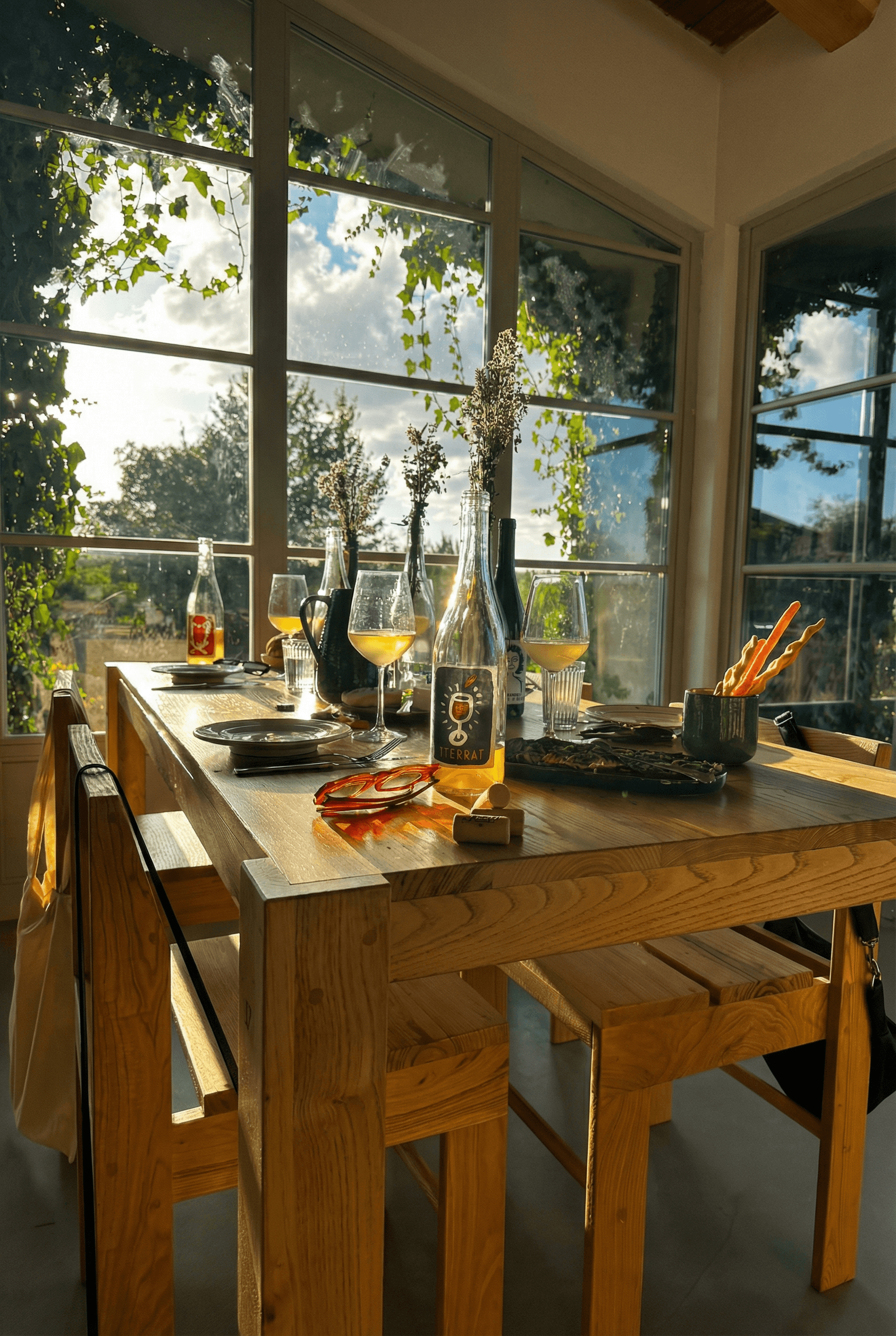
Some of it is unlikely on paper. Rosarella takes the must from white grapes and runs it over sangiovese skins at the end of fermentation, which is a route to rosé that nobody would pick for efficiency. Tierra comes off a forty-year-old vineyard down near Orvieto: seventy percent procanico, with drupeggio, verdello and malvasia making up the rest.
The trade is not hidden. Take out the sulphur and the filter and you have removed the safety net, so a difficult year can be seen in a glass of wine too. A bottle from a farm this size is the record of one autumn on one hill. They give up the consistency of large industrial producers, on purpose.
The — visit
Harvest is work. It is not staged, it does not run to a timetable that suits guests, and a bad forecast can bring the whole thing forward by four days with no notice at all. Staying in wine country in September means being adjacent to harvest activities.
That said, small producers are generally glad of interest and occasionally glad of hands, and the difference between watching a harvest and helping with one for a morning is the difference between a photograph and a memory. The rules are short. Ask the night before, not at seven in the morning. Wear something you do not like or care about too much. Start when they start. Stop when you are slowing them down, which will happen sooner than you think it will.
Two other things worth knowing. Book the last week of September rather than the middle, because the whites are usually in by then and the days are less frantic. And do not expect to drink anything made from the fruit you have just carried. The wine at dinner is two autumns old, which is most of the point.
Ask if you can participate. The worst answer is a friendly no and a glass of last year's.
A note from Solwyn
We time our own visits to wine properties for September when we can, on the theory that you learn more about a place in its busiest week than in its calmest. The theory has held. So far the main cost has been purple hands and a boot full of bottles neither of us remembers agreeing to buy.