Inside Malauva Casa Agricola
Slow living on the Alfina Plateau
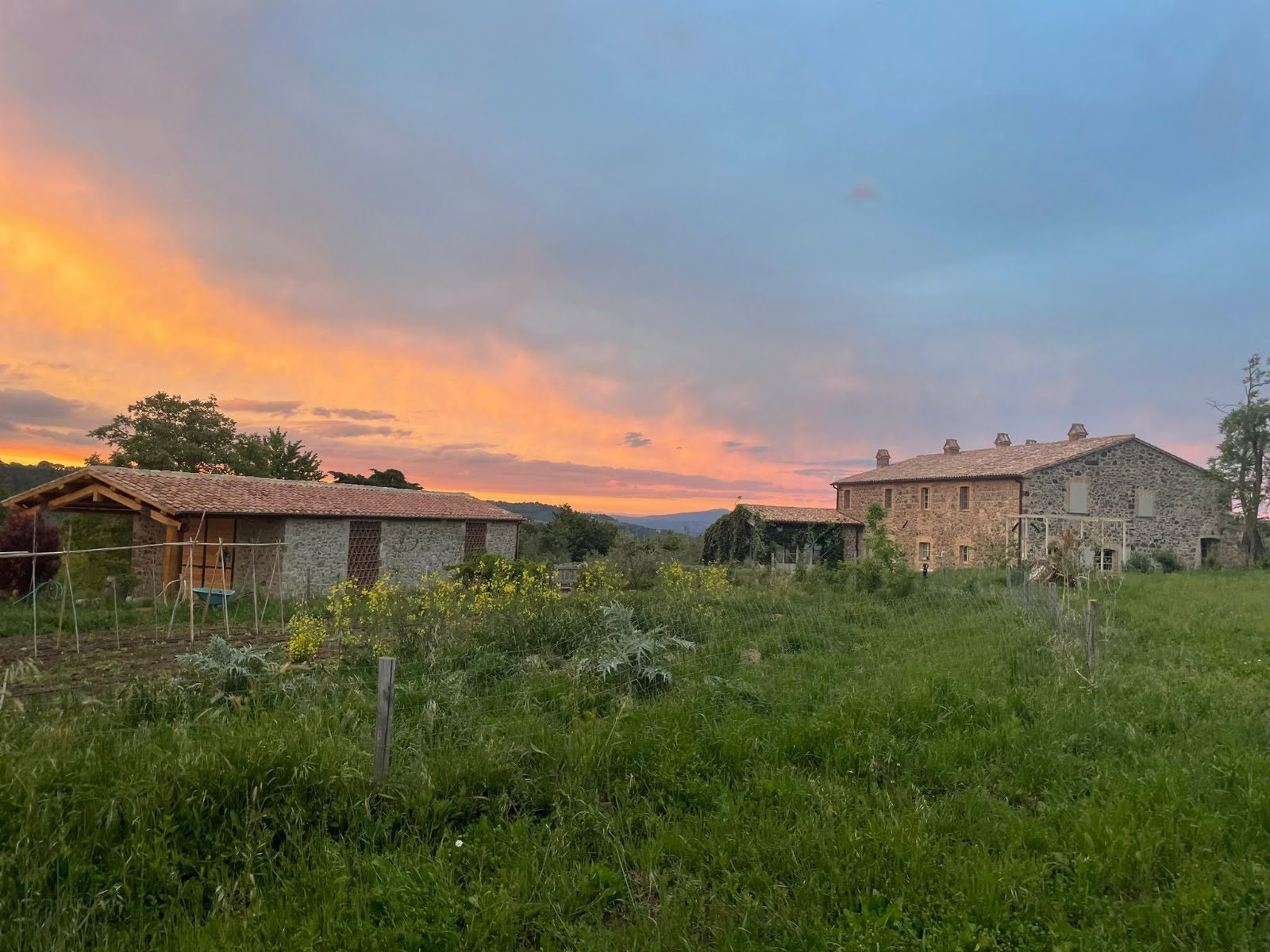
On the Alfina plateau where Umbria, Lazio, and Tuscany converge, Malauva Casa Agricola is a natural wine estate and five-room guesthouse run by the young family of Eliza and Giovanni.
Malauva Casa Agricola is a small countryside estate on the Alfina plateau where a young family has turned a derelict farm into a living home for natural wine, hospitality, and a slower way of being. It's the kind of place where guests wake up to vineyard light instead of notifications, and where "staying" quickly feels more like being welcomed into a life than checking into a room.
The —— past
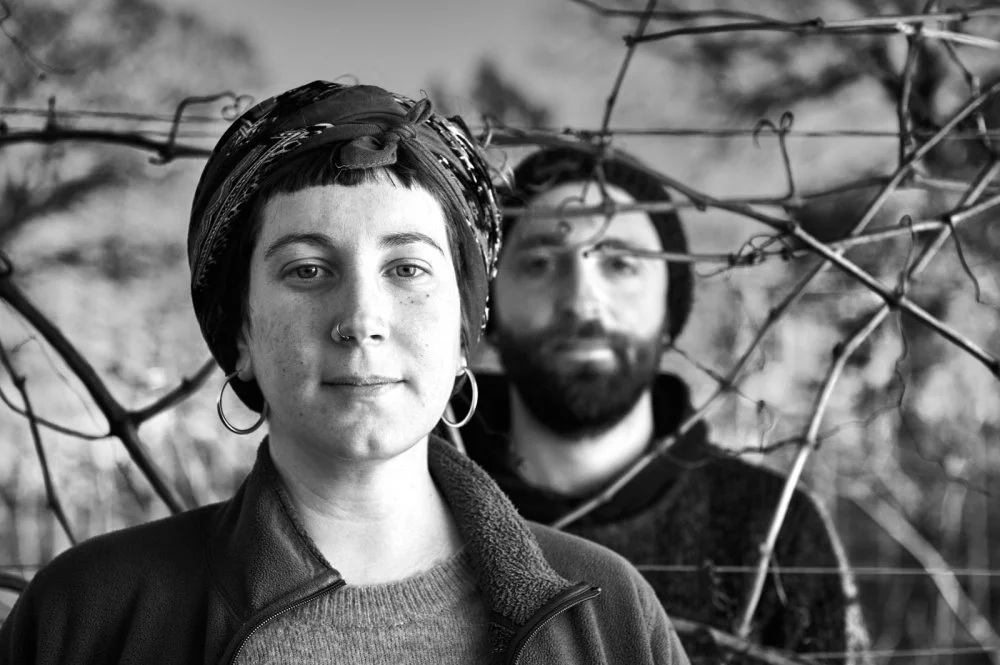
Eliza grew up in Turin and studied Political Science, Giovanni is from Rome with a background in Environmental Engineering. They met not in a vineyard but during an Erasmus semester in Seville, sharing long conversations about politics, environment, and how they did not want to spend their lives in offices and big cities.
The tipping point came with the chance to follow a more conventional path: they both decided to turn down an opportunity to continue with master's studies in Barcelona. Instead, in 2012, they bought a camper van and started WWOOFing across central Italy, trading labour for a bed, meals, and the chance to learn how real farms work season after season. Those five years of moving between farms were their real education: pruning vines, picking olives, feeding animals, and watching families who had learned to measure time in harvests rather than in quarters.
By 2017, they felt ready to plant roots of their own. The property that would become Malauva Casa Agricola was, at that time, almost a ruin: an old estate once owned by a noble family and home to three farmer families under the traditional mezzadria sharecropping system, abandoned since the 1980s. There was no water or electricity, the roof had collapsed in places, and the land - six hectares with 3.5 under vines and about one hectare of olive groves and fruit trees - was waiting for someone willing to listen and start again.
Slowly, with a small team and a lot of manual work, Eliza and Giovanni cleared the land, rebuilt the structures, and began the long, patient process of turning an abandoned farm into a home that could welcome both their family and future guests.
The —— working farm
Malauva is first a winery, then a place to stay. The vineyards, spread across the gentle slope of the Alfina plateau near the border of Umbria, Lazio, and Tuscany, are the project's spine: 3.5 hectares of vines on volcanic soils shaped by an ancient crater, just a short drive from Lake Bolsena. At around 500 meters of elevation, the air is cooler, the light is clear, and the rhythm of work follows the needs of the vines.
From the beginning, Eliza and Giovanni chose a natural approach to wine. Their philosophy is simple: natural fermentation and zero additives, with as little intervention as possible so the grapes and the place can speak for themselves. The first vintage came in 2018, when they were still vinifying in a friend's cantina, learning through a mix of hands-on experience, study, and mentorship from more seasoned winemakers. Between 2019 and 2021 they continued to work out of that shared space, refining their processes and gaining more confidence with each harvest.
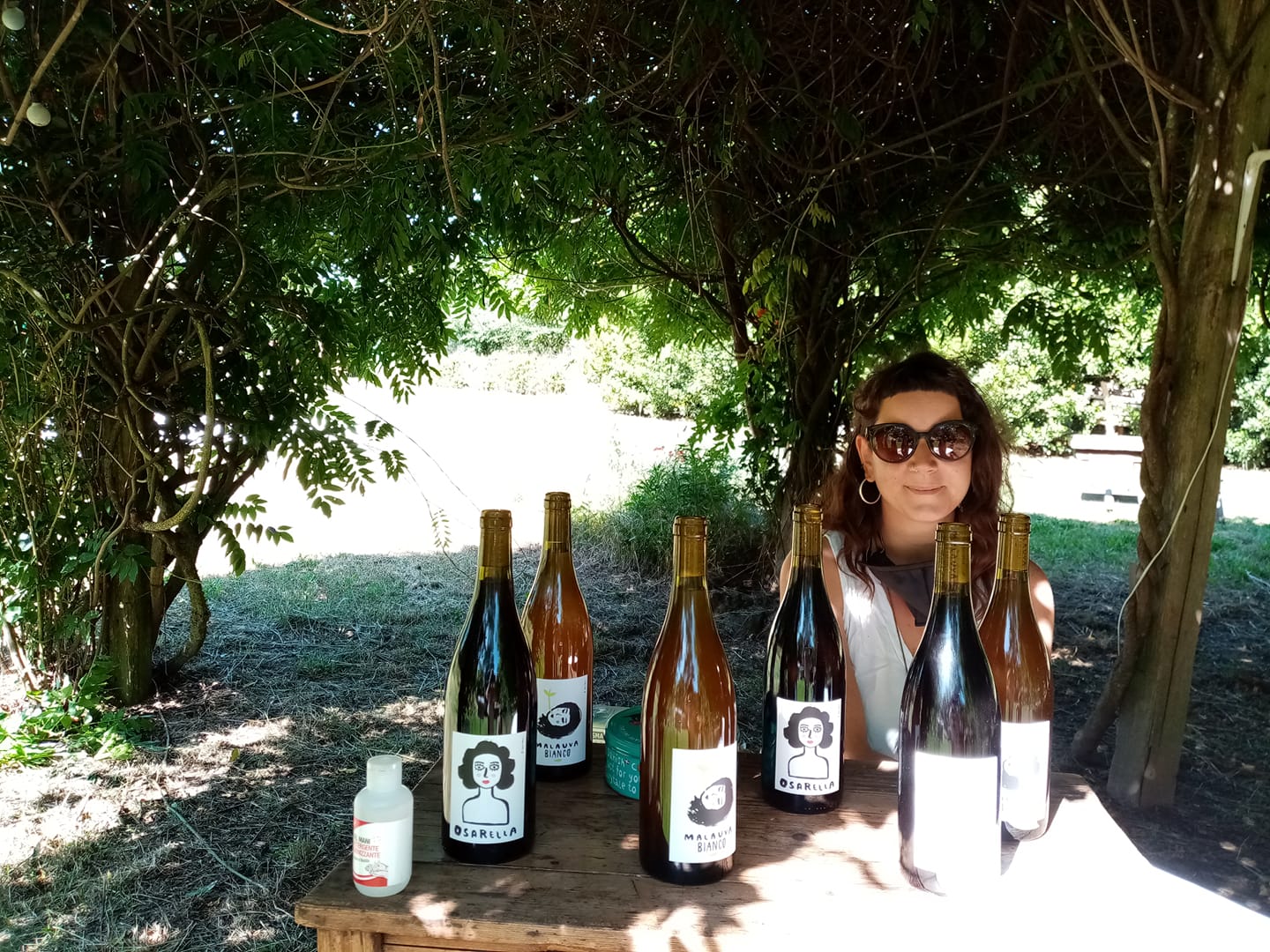
In 2022, they converted a former pig stable on the property into their own cantina. This modest, carefully adapted building is now where grapes arrive at harvest, where the wines ferment and rest, and where guests today step in for tastings and stories. The farm's history runs deeper than the surface: old Etruscan tombs below ground have been repurposed as cellars, allowing the wines to age in naturally cool, stable conditions that are both practical and evocative of the territory's ancient layers.
Malauva's team remains intentionally small: Elisa, Giovanni, and a field assistant who has been working with them for the past two years. Together, they handle pruning, harvest, cellar work, hosting, parenting two young children, and the many invisible tasks that keep a rural project alive. The result is a living farm where guests quickly understand that what they are stepping into is a way of life in motion, not a staged "experience."
The —— mornings
Hospitality at Malauva started slowly, almost as a natural extension of the wine project. In spring 2024, before opening rooms, the estate began to host monthly events that combined tastings, collaborations with producer friends, and informal gatherings around food and wine, giving the local community and early visitors a glimpse of what the place could become. Five double rooms finally opened to guests in January 2025, comfortable spaces that respect the building's original character.
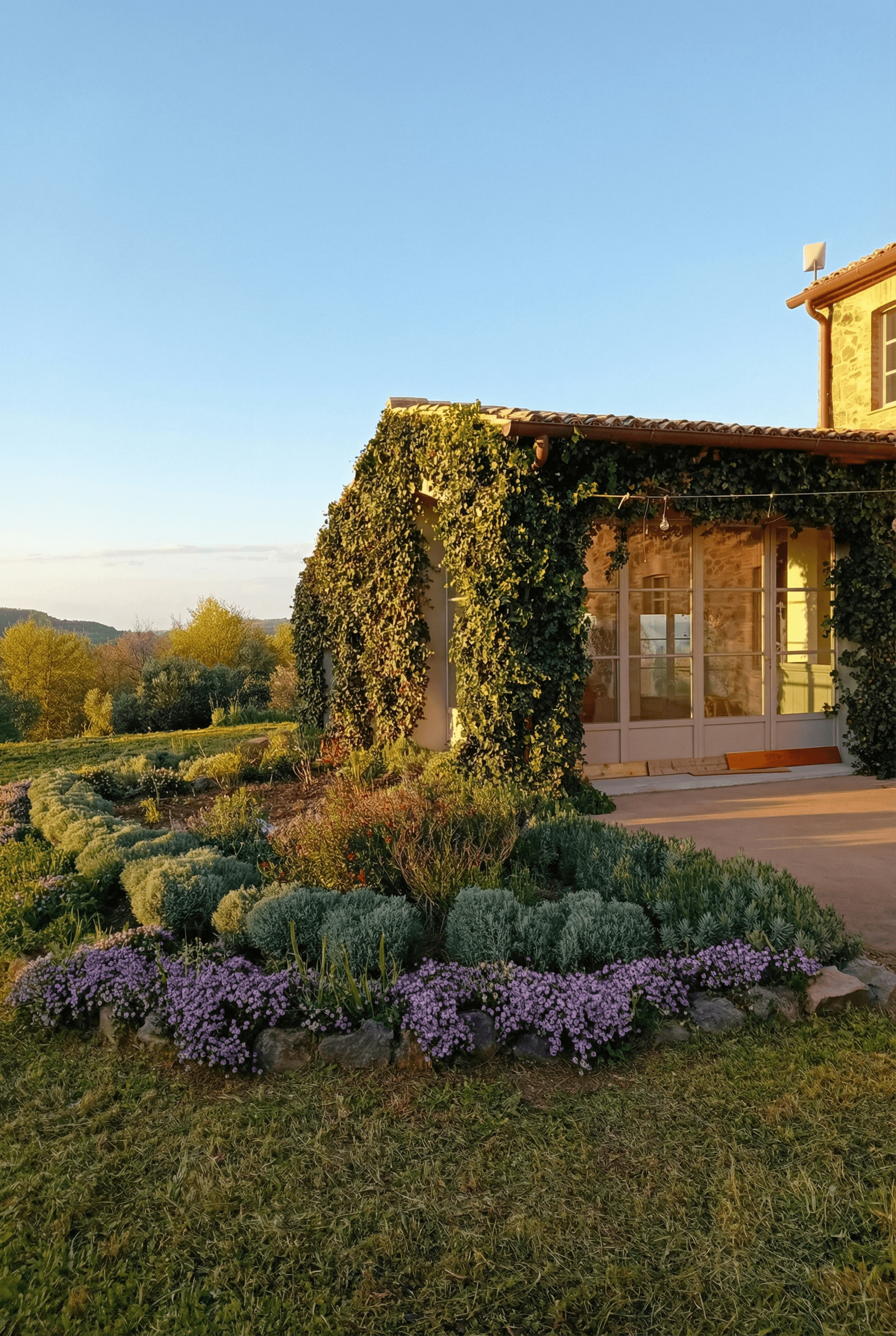
The location is one of the estate’s most unique traits. Malauva sits a few minutes away from the nearest village, on the border where Umbria, Lazio and Tuscany meet, far from the busier circuits of Perugia and Assisi but still within one and a half to two hours of Rome. Set on the Alfina plateau, at 500 meters, the estate looks out over a landscape of vines, olive trees, and woods that still feels less developed than the classic Umbrian postcards.
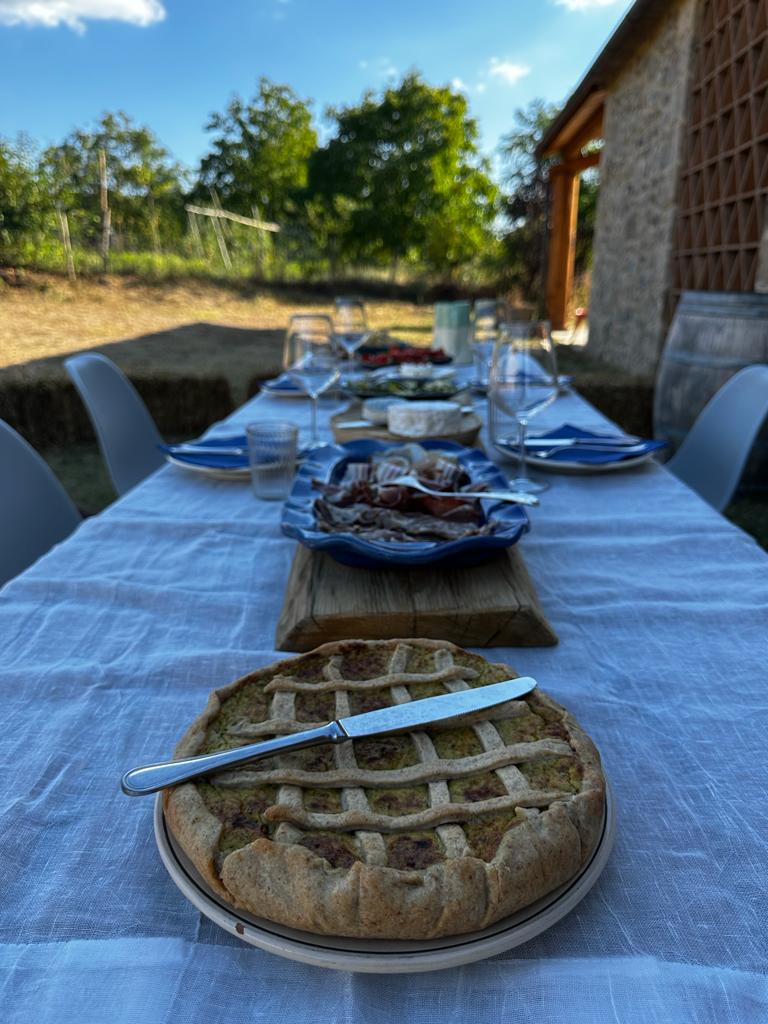
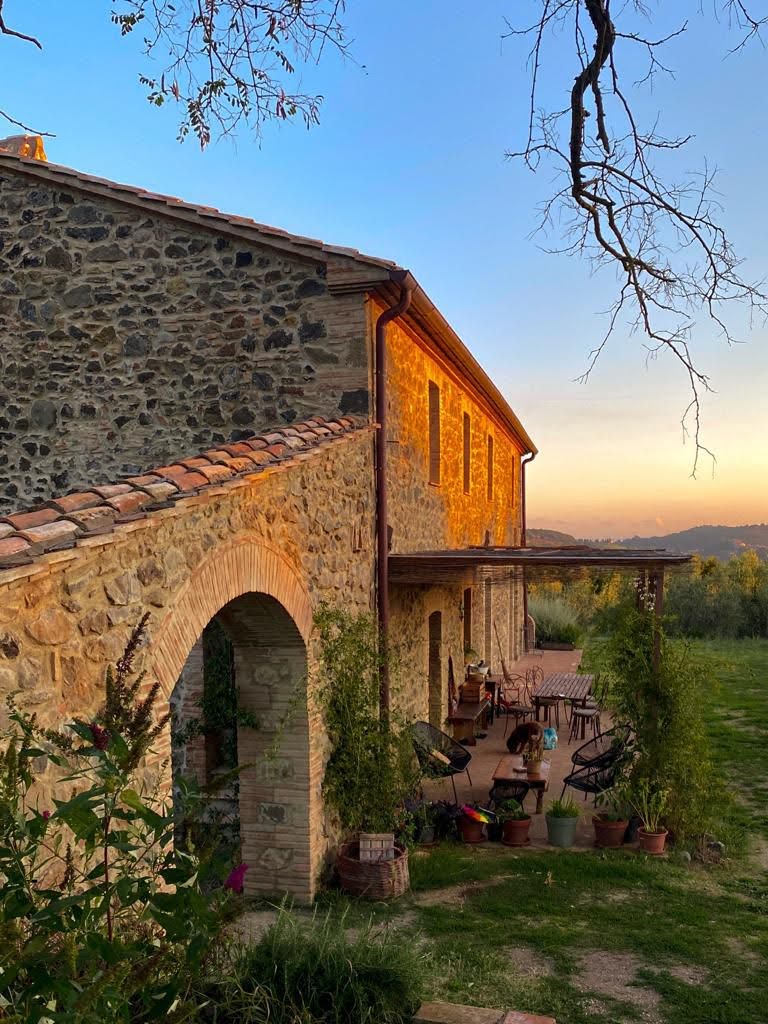
Stepping into the house, guests notice materials before design labels. The renovation relied on local artisans, lime-based mortars, and recovered original terracotta floors, along with materials sourced from small regional workshops rather than industrial suppliers. Heating comes from a modern wood combustion system that uses timber from the property, while solar panels provide most of the electricity and solar thermal supports hot water production in the warmer months, keeping the farm close to energy self-sufficiency while remaining grid-connected.
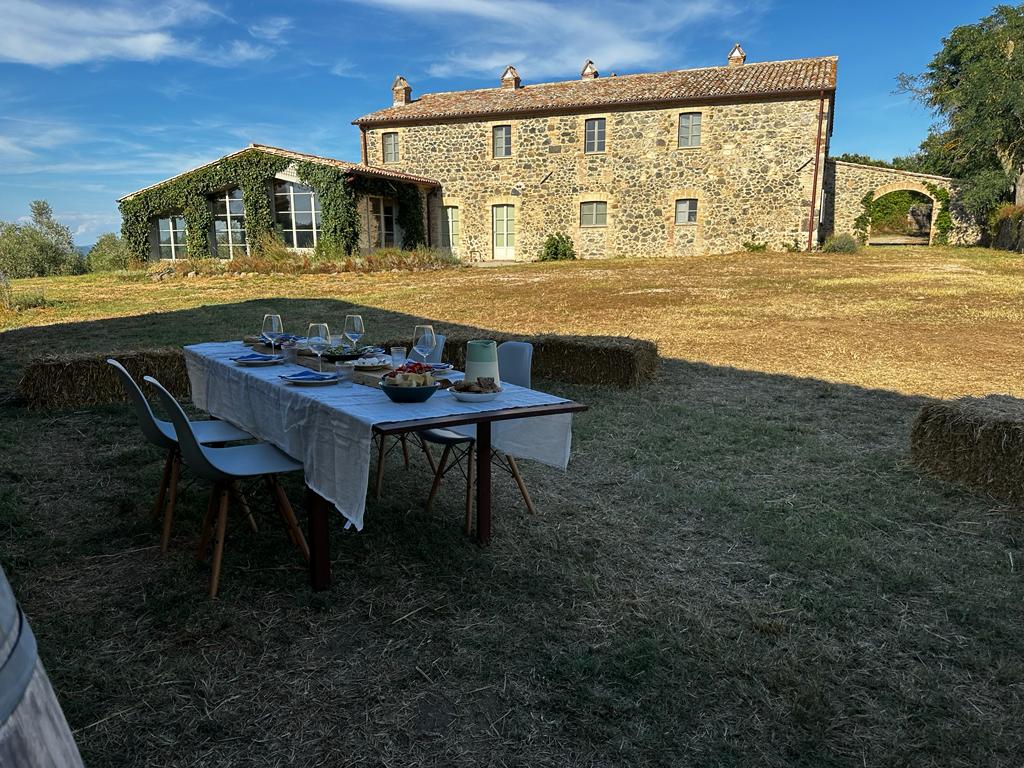
A stay usually begins with a simple promise: bed and breakfast. Mornings at Malauva are unhurried: breakfast does not feel like a narrow time slot but like a shared moment, where conversations often stretch and guests find themselves speaking with Elisa or Giovanni about the day ahead, the vines, or the story of the house. Elisa proudly mentions how many of their guests describe feeling "at home" more than "on holiday," thanks to a sense of welcome that is just like being received as a friend.
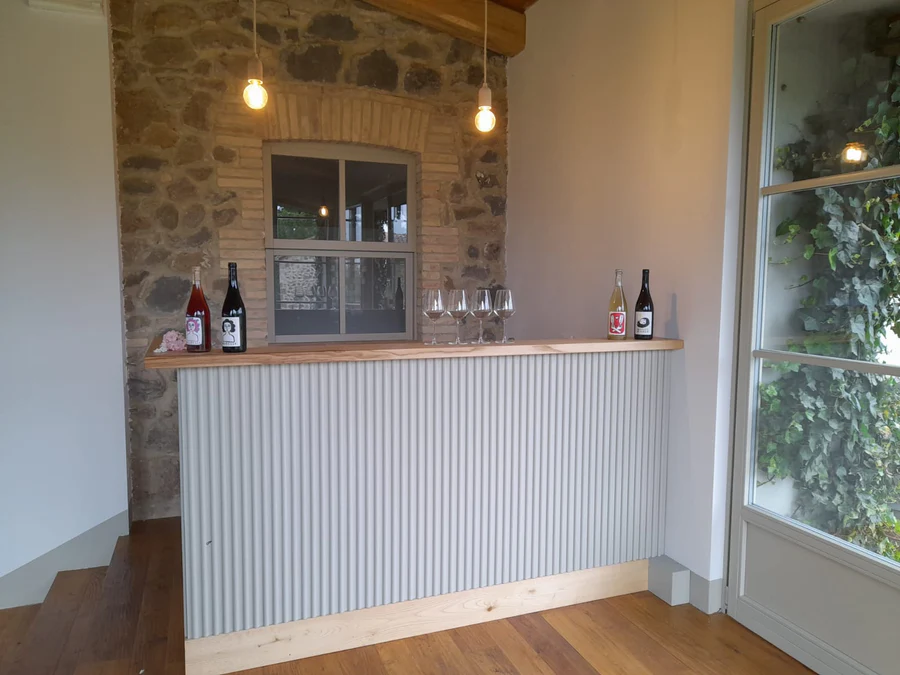
The heart of the guest experience is the encounter with the farm's work. Stays typically include vineyard walks, a visit to the cantina, and a natural wine tasting paired with local foods that tell as much of the region as the labels on the bottles. Kitchen facilities for more elaborate in-house meals are still being completed, so Elisa and Giovanni often recommend nearby restaurants or help organize custom dinners and experiences on request, especially for groups who plan ahead.
The people who find Malauva tend to know what they are looking for. Many come from Rome, drawn to natural wine and the desire to spend a weekend somewhere that feels truly rural yet reachable. Others are international visitors moving along natural wine routes across Italy.
The —— essence
Malauva's story is still in motion. After years of focusing on vineyard and house, Eliza and Giovanni are now opening the project to more structured forms of collaboration, both in the wine world and in hospitality.
Rather than rushing onto major booking platforms, Malauva has so far chosen slower, more relational ways of being discovered. The estate works mainly through Instagram and word of mouth, preferring to reach people who are willing to read, ask questions, and engage with the story behind the place before booking. This approach mirrors their broader philosophy: growth that feels coherent with the land and their family life, not growth at any cost.
For guests who choose to make their way to this corner where Umbria, Lazio, and Tuscany meet, Malauva offers something increasingly rare. It is a place where the line between host and visitor softens, and where slow travel means staying long enough for the house, the land, and the people who care for it to become part of one's own story.
This is for you if…
... you're drawn to natural wine and want to taste it where it's actually made: straight from the cellar, with the people who made it. ... you travel to feel at home, not on holiday, where mornings stretch over breakfast and conversation. ... you're looking for rural Italy without the postcard crowds, somewhere reachable from Rome but far from the Perugia–Assisi circuit. ... you care about how places are built: restored with local artisans, reclaimed materials, and a low footprint on the land. ... you want to understand the place you visit - vineyard walks, cellar stories, and a family who'll tell you everything if you ask.
Malauva is for slow travelers and natural wine lovers who want to explore places not many others visit, and to feel genuinely welcomed into someone's life.